
The night sky tonight gives viewers a chance to see constellations, the moon, and several moving objects without much preparation.
Features
A guide to tonight’s night sky, including how to find Lacerta and other seasonal constellations
Find out what is visible in the night sky tonight, with guidance on locating Lacerta and other key constellations before the moon rises
-
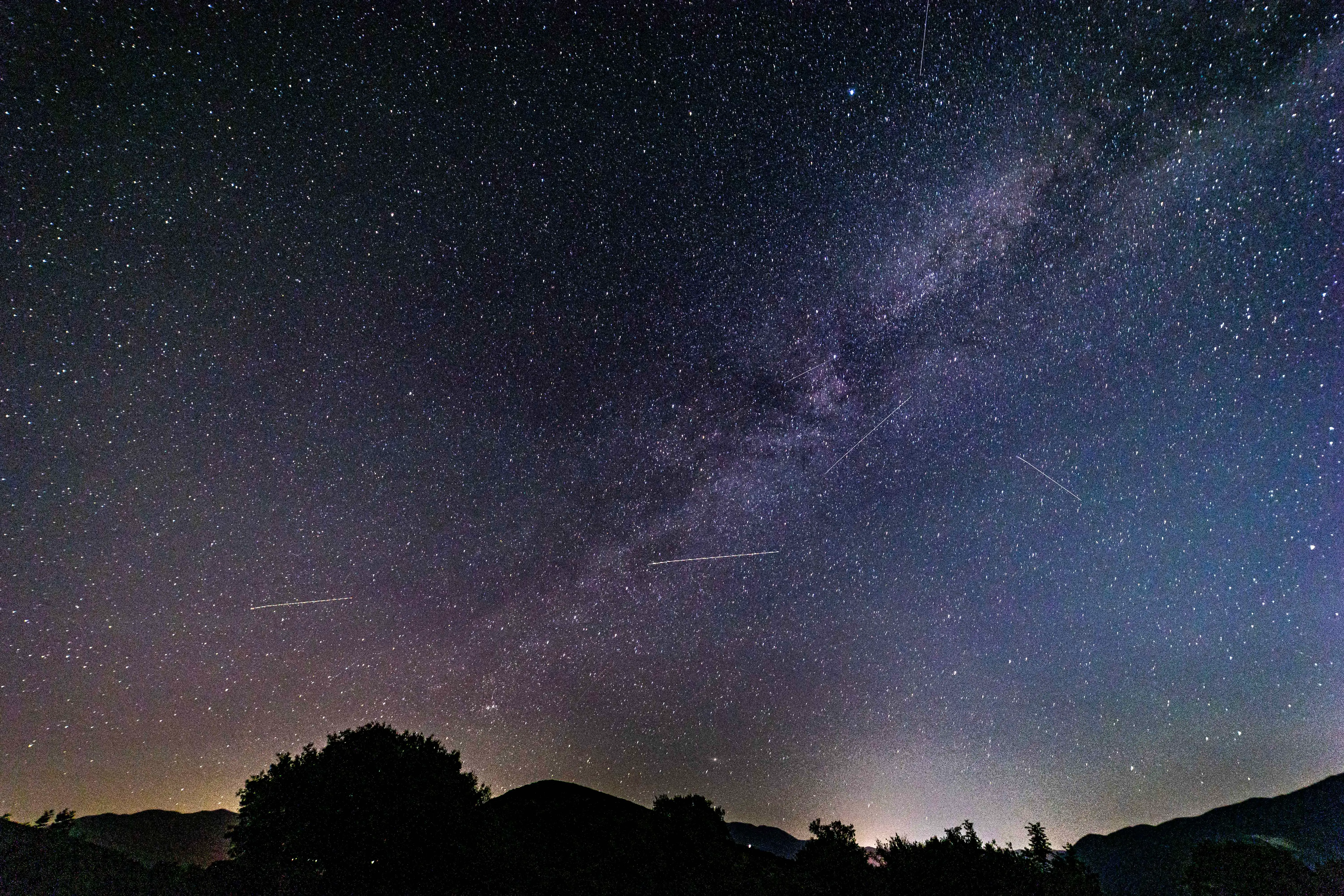 Milky Way captured with long exposure photography technique (Image via Getty)
A telescope or binoculars can help with faint stars, but the unaided eye is still enough to learn the basic shapes of the sky. Many people follow the moon, meteor showers, and bright planets, but constellations also give clear markers that help explain where to look.
One of the official 88 constellations, Lacerta, “The Lizard,” is visible above the northwestern horizon after dark. Jamie Carter explains that “Lacerta is a small, wiggly constellation composed of eight rather faint stars.”
The last-quarter moon will not rise until around midnight, giving a darker sky in the early evening. This allows viewers to look for fainter objects, including the Milky Way band.
To find Lacerta, viewers first look for Cassiopeia, which forms a W-shaped pattern, and the Great Square of Pegasus, which stands out as a large four-star shape. Lacerta sits between these two markers.
This guide explains where to look, what patterns help with navigation, and how the moon’s timing affects visibility. It gives a simple overview for anyone preparing to observe the sky tonight.
What can you see tonight?
Several objects can be seen with or without equipment during the hours after sunset. Cassiopeia appears high overhead and is easy to locate because of its repeating W-shape.
The Great Square of Pegasus is another clear marker in the same part of the sky. Between these two shapes is the constellation Lacerta. Carter notes, “The easiest way to find it is to first identify Cassiopeia and the Great Square of Pegasus.”
This gives a fixed reference frame for viewers who may not be familiar with this part of the sky. Once these two guides are found, the space between them can be scanned slowly.
Lacerta stretches across a region of the Milky Way, which looks like a soft band of countless faint stars. Carter also explains, “Look between these two famous constellations, and you will find Lacerta.”
In addition to these constellations, satellites may pass overhead. These objects follow steady, straight paths and do not blink, making them different from airplanes. The late-rising moon also affects visibility.
Before it climbs high enough to brighten the sky, faint stars become easier to see. By the time the moon appears around midnight, some of these faint features may fade from view.
For those watching early in the evening, darker conditions give a wider range of observable objects. Meteor activity may appear depending on seasonal timing, and any visible streaks can be seen without equipment. These features together make the early evening a good time to study sky patterns and movements.
How to view and what to expect
Binoculars or a small telescope can help bring out faint stars in Lacerta and nearby points along the Milky Way. Many observers begin by scanning the region between Cassiopeia and the Great Square to confirm the location of Lacerta.
As Carter states, “Lacerta sits along the dense starfields of the winter Milky Way.” This means the area has many stars that blend together, so slow scanning works better than quick glances.
The unaided eye is still enough to see the major shapes of Cassiopeia and Pegasus, which serve as starting points for navigation. The moon’s late rise reduces sky brightness for several hours, giving clearer views early in the night.
Satellites move through the sky at a steady rate and can be followed for several seconds or minutes.
Expect gradual changes as the night continues. Stars appear higher or lower as the sky shifts, and some markers may move toward the horizon. Another helpful reminder from Carter states, “A good telescope or pair of binoculars will help you see some of the night sky’s fainter objects.”
This allows viewers to decide whether to observe with equipment or without it.
__________________________________________________________________
Stay tuned for more updates.
TOPICS: Astronomy, Constellation, Cassiopeia, Lacerta Constellation
More Astronomy
on Primetimer:
- James Webb Space Telescope spots mysterious twin helium tails streaming from a distant hot Jupiter
- Interstellar comet 3I/ATLAS shines in fresh views from Hubble and the Juice spacecraft
- Researchers uncover solar wind event that may explain Uranus’ strange magnetic behavior
- Interstellar visitor 3I/Atlas makes surprise appearance in NASA’s Punch observations