
‘AI Slop’ now makes up for 20% of all videos shown to viewers: Reports
-
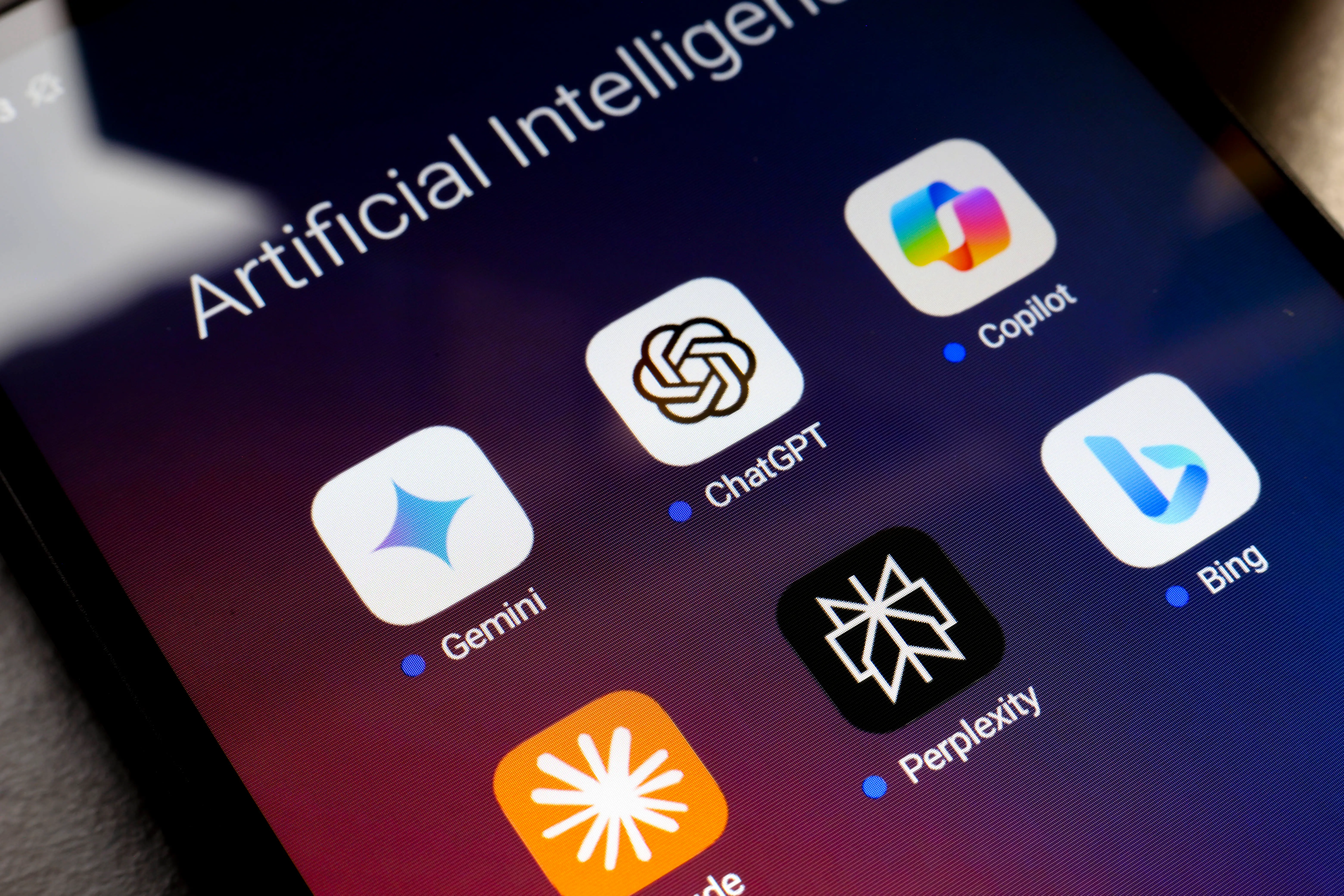 The logos of Google Gemini, ChatGPT, Microsoft Copilot, Claude by Anthropic, Perplexity, and Bing apps are displayed on the screen of a smartphone in Reno, United States, on November 21, 2024. (Photo by Jaque Silva/NurPhoto via Getty Images)
A new research study by Kapwing is now raising serious questions about originality, ethics, and who truly benefits in the digital creator economy. AI in content creation was once seen as a tool to support creativity, but now, with a growing wave of low-quality, AI-generated videos, commonly referred to as “AI slop,” it has become a concerning topic of discussion. According to a recent study by video-editing company Kapwing, more than ‘’20% of the videos shown to new YouTube users are ‘AI slop.’’
The study and reports focus on these new, trendy videos and channels where many users are exposed to AI videos and shorts on YouTube. The study examines which countries and YouTube channels are getting the most views, how popular these videos are, and how much money they might be earning.
Kapwing selected the top 100 trending YouTube channels in every country, which together added up to about 15,000 channels in total. With the help of SocialBlade (a tool to track statistics and growth of content online), they managed to figure out their views, subscribers, and yearly income. 278 channels were found to be ‘AI slop,’ and together they have 63 billion views, 221 million subscribers, and an estimated $117 million in yearly revenue.
With that, they even created a new YouTube account to check what content appears on their feed and watched the first 500 Shorts to see how many were AI-generated or brain-rot videos. Among them, 104 (over 20%) videos were AI slop, according to reports by The Guardian.
AI slop channels are now taking over users’ feeds these days, reports suggest
These brain-rotting yet addictive videos are common among young users who are exposed to nonsensical cartoonised AI videos that lack sensibility and information. These videos represent a new era of content designed specifically to work with algorithms, not humans.
The study then rank-wise listed channels from various countries, as per their views, subscribers, and earnings. Spain took the first spot in terms of having 20 million followers of trending AI slop channels. Egypt follows with 18 million, while the United States, Brazil, and India also record millions of subscribers.
Some AI slop channels earn millions. India-based Bandar Apna Dost, the most-viewed channel in the study, has accumulated 2.4 billion views, estimating the channel could earn up to $4.25 million annually.
According to reports by The Guardian, Singapore’s Pouty Frenchie, which appears to target children with AI visuals of a cartoon dog visiting candy forests, is estimated to make nearly $4 million a year.
While these figures may suggest success, they raise difficult questions about what creativity now means. These videos are often repetitive, plotless, and mass-produced using prompts.
For traditional creators, AI slop represents a more serious threat. It floods platforms with noise, making it harder for thoughtful, human-made content to reach audiences. Researchers warn that repeated exposure to such content can also blur reality, making viewers more susceptible to misinformation and manipulation.
YouTube, meanwhile, walks a fine line. A company spokesperson stated (via The Guardian) that AI is merely a tool that can be used to create both high- and low-quality content, and that all videos must comply with community guidelines. However, as long as AI slop drives engagement, the algorithm continues to reward it.
TOPICS: AI slop