
Apollo samples reveal how the Moon's lunar surface changes over time
-
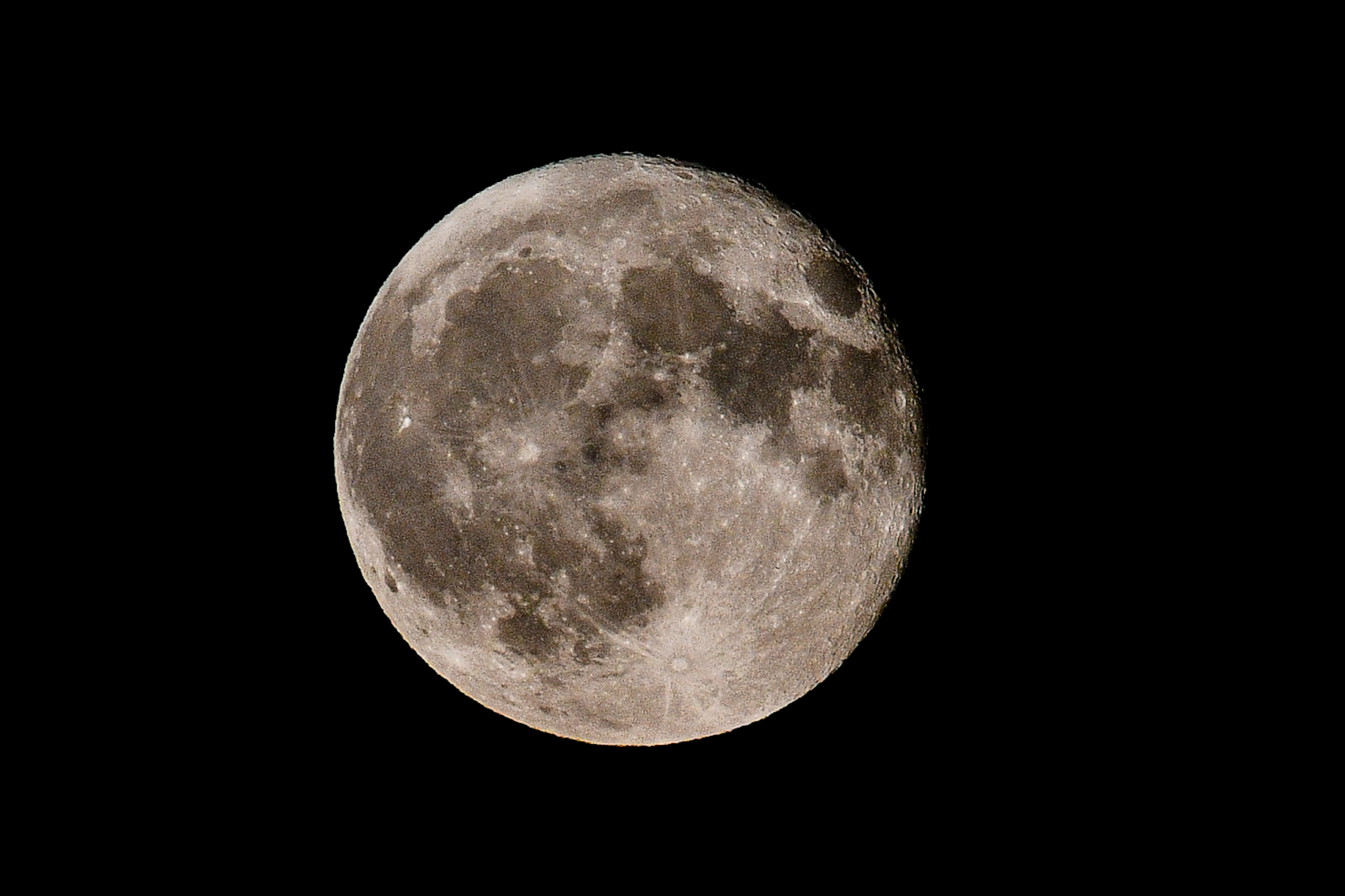 The Super Moon seen on August 20, 2024 in Turin, Italy. This is the first of two super moons in the month of August, with the end of the month seeing a rare super moon, which happens about once every ten years (Image via Getty)
Research on Apollo lunar samples provides evidence of how the Moon's surface evolves due to space weathering. The study focused on how the age of lunar regolith affects its physical and spectral properties.
Scientists from the Southwest Research Institute analyzed three Apollo soil samples, two highly weathered and one comparatively young sample, collected from inside a trench.
Their objective was to determine how exposure to the solar wind and micrometeoroid impacts influences surface characteristics over time.
The results confirm that the Moon's surface experiences measurable changes, which can affect the interpretation of data collected by the Lunar Reconnaissance Orbiter (LRO) and other remote sensing instruments designed for resource mapping.
How Apollo samples show age-related changes in the Moon’s surface
Effects of space weathering on lunar soil
The Apollo soil samples were examined using Far Ultraviolet (FUV) imaging on Earth, along with scanning and tunneling electron microscopy.
Older samples contained nanometer-scale iron particles produced by prolonged solar wind exposure.
These nanophase iron particles accumulated on regolith grains over billions of years and were further modified by repeated micrometeoroid impacts.
The younger sample, collected from a trench, contained significantly fewer nanophase iron particles.
The roughness of the particle surfaces influenced the way ultraviolet light interacted with the soil.
Newer regolith displayed forward scattering, where light was deflected away from the source, whereas older regolith showed backscattering, reflecting light back toward the light source.
This difference caused newer regolith to appear brighter under FUV imaging than older soil.
Implications for lunar resource mapping
The changes caused by space weathering can mask the chemical composition of lunar soil in spectral data.
Two older Apollo samples analyzed came from distinct regions: one from a mare with high titanium content and dark lava rock, and another from a highland with lower titanium content and lighter rock.
Despite their differing mineral composition, both appeared nearly identical under FUV analysis.
This means that the presence of nanophase iron and surface roughness can hide chemical signatures, thus, confusing the interpretation of ultraviolet spectral data.
Observations made by the Lunar Reconnaissance Orbiter show that the age of regolith has an impact on the mineral distributions interpretation.
The results reveal that the ancient lunar soil can mask chemical signatures such as titanium that are present in FUV observations.
Laboratory observations and lunar surface properties
Laboratory analysis also highlighted differences between collected samples and direct satellite observations.
Fresh lunar soil observed by Lunar Reconnaissance Orbiter appears redder than older soil, while lab samples showed brighter FUV reflectance for younger soil.
Researchers suggested that this discrepancy may result from factors such as the fluffiness of soil, which is removed during sample collection, or the presence of shock-altered materials caused by micrometeoroid impacts.
The laboratory tests confirmed the effects of nanophase iron and surface roughness on FUV spectra but could not fully replicate the Moon’s natural conditions.
This study demonstrates that lunar soil undergoes systematic physical and spectral changes over time.
Interpretation of FUV and other remote sensing data is affected by the age of lunar regolith.
These changes affect how lunar surface data are interpreted for resource mapping.
The findings reported by researchers at the Southwest Research Institute provide information on how space weathering affects light scattering and mineral detection, emphasizing the need for multi-wavelength analysis when observing the Moon’s surface.
The study contributes to ongoing efforts to evaluate lunar resources and improves understanding of how surface aging influences satellite data interpretation.
Stay tuned for more updates.
TOPICS: Apollo lunar samples, Apollo soil samples, Far Ultraviolet Moon imaging, Lunar Reconnaissance Orbiter data, Lunar regolith aging, Lunar resource mapping, Moon surface changes, Moon titanium detection, Nanophase iron lunar soil, Space weathering on the Moon