
Culinary Class Wars 2 raises the stakes with an even fiercer black spoon vs. white spoon showdown
-
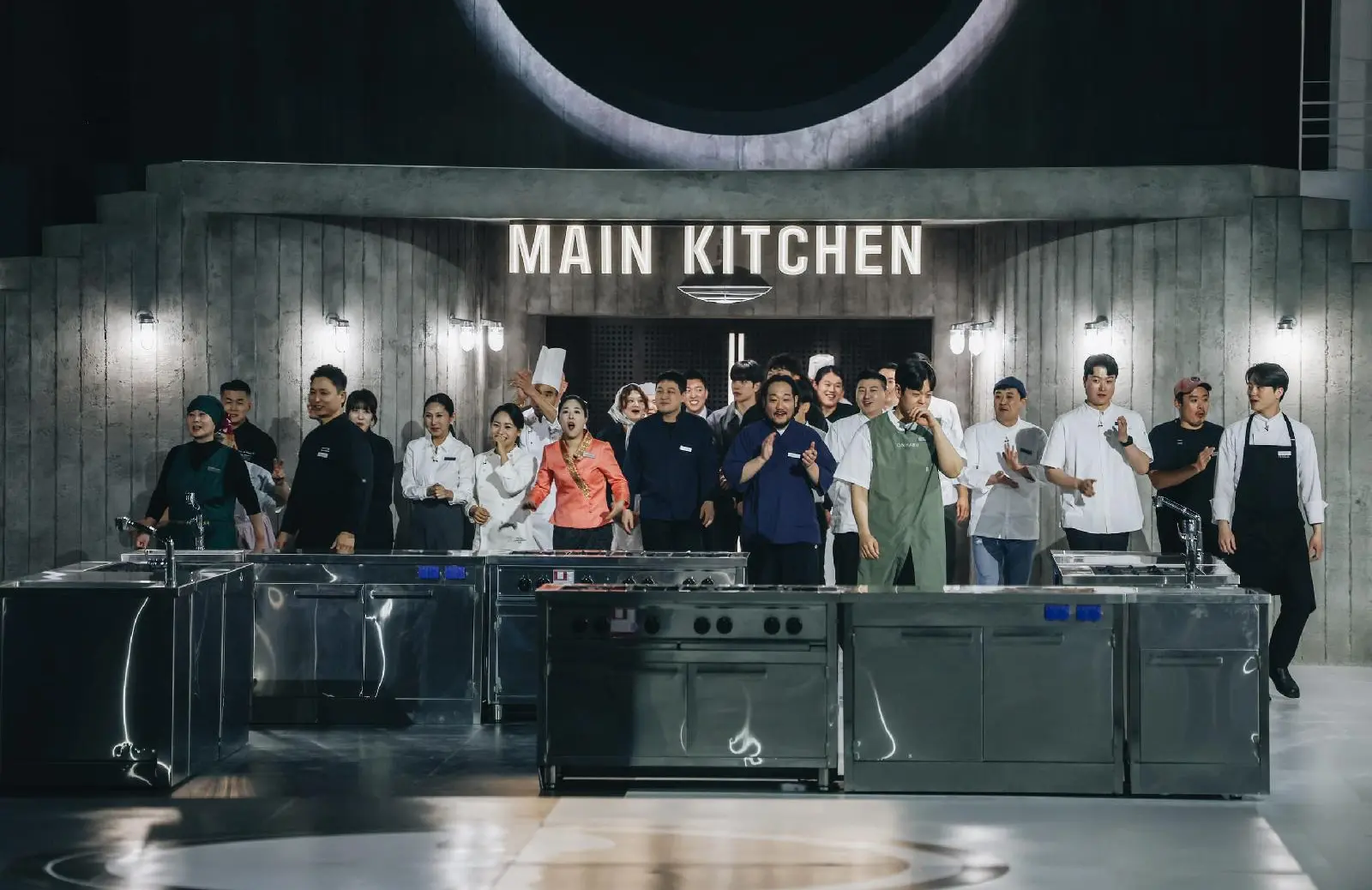 Culinary Class Wars 2 (Image via Netflix)
Culinary Class Wars returns to the competitive framework that made the series a global breakout, doubling down on hierarchy, skill, and spectacle.
Premiering with its first three episodes on December 16 at 5 p.m. KST, the second season resumes the central conflict between Korea’s most celebrated chefs and a new wave of challengers determined to dismantle the established order through technique and taste.
The format remains clear and uncompromising. White Spoon chefs, already validated by Michelin stars, television fame, and decades-long careers, return to defend their standing at the top of the culinary hierarchy.
Black Spoon chefs, positioned as underdogs, enter with fewer public accolades but with reputations built on specialization, regional mastery, and endurance.
Season 2 expands both sides, sharpening the contrast and accelerating the pace of elimination-based battles.
Culinary Class Wars previously made history as the first Korean Netflix variety show to top the platform’s Global Top 10 Non-English TV Shows for three consecutive weeks.
It also ranked first in Gallup Korea’s “Favorite Programs Among Koreans” survey for September 2024, marking the first time an OTT variety program achieved that position.
That success established the franchise as more than a cooking competition, placing it at the center of Korea’s reality television landscape.
Culinary Class Wars 2 deepens the divide between prestige and proof
Season 2 opens by expanding the White Spoon roster to 18 chefs, presenting a lineup that reflects both institutional prestige and public recognition.
Among them are Lee Jun, a Michelin two-star chef; Son Jong-won, who has earned Michelin one-star recognition in both Korean and Western cuisine; and Venerable Sunjae, recognized as Korea’s first master of temple cuisine.
The cast also includes Hu Deok-juk, a Chinese cuisine specialist with 57 years of experience, and Park Hyo-nam, a French cuisine expert with 47 years in the field.
Television audiences are also represented. Jung Ho-young, Sam Kim, and Raymon Kim return as star chefs familiar to viewers across multiple cooking formats.
Song Hoon, a judge from MasterChef Korea Season 4, and Im Seong-geun, winner of Hansik Battle Season 3, round out a group that embodies formal validation within Korea’s culinary ecosystem.
A central hook of Culinary Class Wars 2 is the introduction of two hidden White Spoon chefs. Teased before the season’s launch, these chefs were presented with their identities concealed, generating speculation across online forums and social platforms.
Episodes 1 through 3 confirm that their eventual reveal is not cosmetic but structural, designed to alter competitive dynamics and unsettle alliances among the White Spoon ranks.
The Black Spoon contingent arrives with equal emphasis, though framed differently. Season 2 features competitors who, by the show’s own framing, might have qualified as White Spoon chefs in the first season.
Their specialties span both traditional and contemporary cuisine: Pyongyang cold noodle specialists, pork cutlet chefs with cult followings, beef rib experts, tteokbokki masters, hand-pulled noodle practitioners, and kimchi specialists trained at five-star hotel kitchens.
This diversification reflects a deliberate recalibration. Rather than positioning Black Spoon chefs solely as scrappy outsiders, Culinary Class Wars 2 frames them as professionals whose skills developed outside mainstream recognition.
The result is a competition less about discovery and more about collision.
The rules reinforce that approach. Early episodes introduce revised challenges and concealed twists that prevent either side from relying on reputation alone.
While the White Spoon chefs enter with established authority, the structure forces immediate performance-based validation.
The Black Spoon chefs, meanwhile, are required to prove consistency across multiple rounds rather than a single breakout moment.
Netflix releases Episodes 1 through 3 simultaneously, allowing viewers to track the escalation of tension without interruption.
The condensed release schedule underscores the show’s emphasis on momentum, ensuring that early matchups carry immediate consequences.
Throughout its return, Culinary Class Wars 2 maintains its defining thesis: culinary hierarchy is not fixed, but it is defended fiercely.
The White Spoon chefs compete not only to advance but to protect symbolic capital built over decades.
The Black Spoon chefs challenge not just individuals but the premise that prestige equates to superiority.
By expanding its cast, introducing concealed competitors, and refining its competitive rules, Culinary Class Wars 2 positions itself as a more exacting test than its predecessor.
The second season does not merely repeat the original confrontation; it intensifies it, ensuring that every dish functions as both a technical evaluation and a referendum on status.
As Episodes 1 through 3 of Culinary Class Wars 2 stream on Netflix, it will mark the opening phase of a competition designed to push Korea’s most visible chefs and its most underestimated talents into direct, uncompromising conflict.
Stay tuned for more updates.
TOPICS: Culinary Class Wars , Netflix, Culinary Class Wars season 2