
Culinary Class Wars Season 2 shows how Netflix is turning viewers into restaurant customers
-
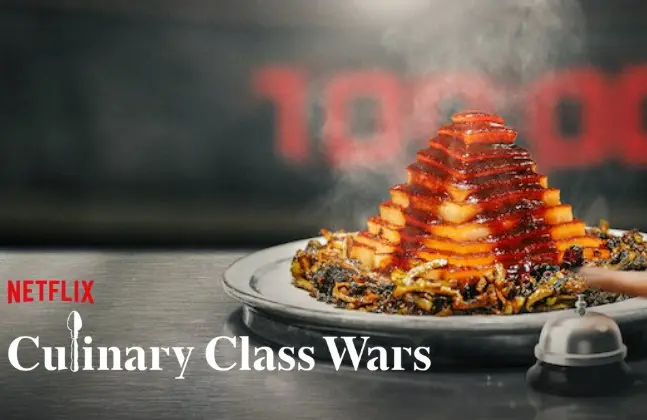 Culinary Class Wars 2 (Image via Netflix)
Culinary Class Wars Season 2 arrived not only as a continuation of a successful cooking competition but as a case study in how Netflix is reshaping the relationship between screen content and real-world consumption.
From its first week on air, the program demonstrated a shift away from traditional product placement toward partnerships designed to move viewers from watching dishes on screen to booking tables and dining in person.
The change is visible in how Culinary Class Wars Season 2 integrates brands, platforms, and physical locations directly into its viewing ecosystem.
Rather than limiting sponsorships to logos or brief on-screen mentions, Netflix structured the season so that participation in the show could extend beyond the episode itself.
As one description of the strategy puts it:
“Instead of just watching the dishes in the video and stopping there, you go to the restaurant yourself to taste and enjoy them.”
At its core, Culinary Class Wars Season 2 remains a survival-style cooking show in which highly skilled but lesser-known “Black Spoon” chefs compete against established “White Spoon” figures.
What distinguishes this season is how Netflix aligned that competition with consumer pathways that exist outside the platform.
Culinary Class Wars Season 2 and Netflix’s experience-based partnership model
The central concept guiding these partnerships has been described as the “everyday expansion of the viewing experience.”
In practical terms, this meant creating direct links between the chefs seen on screen and the restaurants they operate in real life.
Catch Table, the official partner reservation platform for Culinary Class Wars Season 2, introduced a dedicated service allowing users to search for and book restaurants run by cast members from the show.
Netflix also leveraged its “Ne-Net” partnership with Naver to extend that accessibility. Through Naver Map, the platform published a curated list of restaurants operated by Culinary Class Wars Season 2 chefs, enabling viewers to locate and visit those establishments without leaving the ecosystem they already use for navigation and local discovery.
In parallel, Netflix supported membership-based events that included invitations to meals prepared directly by chefs featured on Culinary Class Wars Season 2.
These initiatives reflect a broader recalibration of how content sponsorships function within Netflix programming.
Earlier models of indirect advertising focused largely on passive exposure.
In contrast, Culinary Class Wars Season 2 demonstrates how content can act as an entry point into transactions and experiences that continue after an episode ends.
Brand partners also played an expanded role in shaping the environment of the show itself. Hanssem Co., a home interior and kitchen systems company, joined Culinary Class Wars Season 2 as an official special partner.
The company supplied kitchen systems and equipment used during missions, creating a standardized and functional workspace for competitors.
While the equipment remained secondary to the competition, its presence connected Hanssem’s brand expertise to the practical demands of professional cooking.
CJ CheilJedang took a similarly integrated approach through its food brand Bibigo. The company operated a chefs-only pantry stocked with sauces, seasonings, dumplings, and Hetbahn instant rice.
These products were positioned as foundational ingredients rather than highlighted advertisements, supporting the competition while simultaneously exposing Bibigo to a global audience watching Culinary Class Wars Season 2 on Netflix.
Industry observers have linked the viability of this model to Netflix’s scale.
As a global OTT platform with hundreds of millions of subscribers, Netflix offers partners exposure that extends beyond domestic broadcast limits.
For participating companies, collaboration with Culinary Class Wars Season 2 provided not only immediate visibility but association with a premium, internationally distributed property.
At the same time, the structure carries inherent constraints. The effectiveness of such partnerships depends heavily on the program’s performance.
If Culinary Class Wars Season 2 were to lose audience interest, the downstream value for restaurants and brands would diminish accordingly.
There is also the risk that excessive integration could shift focus away from the competition itself, affecting viewer perception of authenticity.
These concerns have been acknowledged within the industry. A content industry expert summarized the appeal and uncertainty of the approach by stating,
“Netflix’s partnership strategy is clearly attractive in that it expands program influence into an experience-based business model. Given that success is not guaranteed, the expense burden on partner corporations is considerable, so there needs to be a more flexible partnership model and a transparent effectiveness verification system.”
For Culinary Class Wars Season 2, the early indicators suggest that the experiment has landed as intended.
Viewers are not only engaging with the competition but are also being guided toward tangible interactions with the chefs and cuisines presented on screen.
The show functions simultaneously as entertainment and as a directory, mapping fictional tension onto real addresses.
By embedding reservation tools, maps, and branded infrastructure directly into its production framework, Culinary Class Wars Season 2 illustrates how Netflix is redefining what it means to watch a cooking show.
The result is a model in which attention does not end with the credits but continues at the table, translating viewing into dining.
Stay tuned for more updates.
TOPICS: Culinary Class Wars season 2 , Netflix
- Culinary Class Wars Season 2 sets up a quiet showdown between Hu Deok-juk's legacy and Sam Kim's restraint
- Culinary Class Wars Season 2 storms non-drama charts with first-week buzz surge
- Who is Sam Kim from Culinary Class Wars season 2? Here's everything to know about the chef
- Culinary Class Wars season 2 episode guide and complete schedule: What days do the new episode drop?