
James Cameron studied neuroscience so viewers won’t get headaches watching Avatar: Fire and Ash in 3D
-
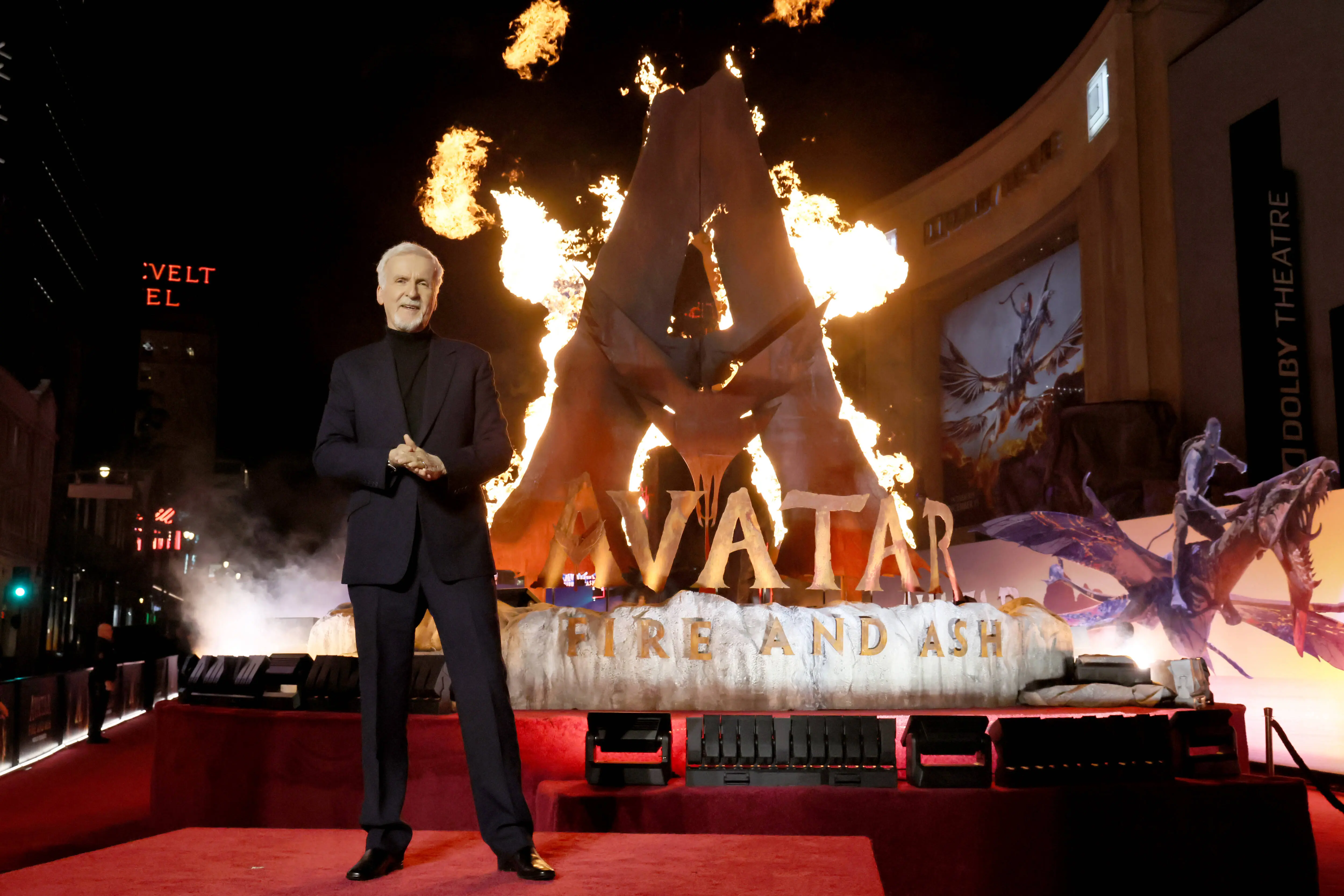 HOLLYWOOD, CALIFORNIA - DECEMBER 01: James Cameron attends the world premiere of 20th Century Studios "Avatar: Fire and Ash" at The Dolby Theatre in Hollywood, California on December 01, 2025. (Photo by Rodin Eckenroth/Getty Images for 20th Century Studios)
Avatar: Fire and Ash is now in theaters, and James Cameron is getting unusually specific about how he wants people to watch it in 3D. The third Avatar film arrives with standard 3D screenings and select high frame rate options that can play certain sequences at 48 fps, depending on the venue.
The cast again includes Sam Worthington, Zoe Saldaña, Sigourney Weaver, Stephen Lang, and Kate Winslet, with Oona Chaplin among the newer faces. Cameron’s core point is that some discomfort in 3D is less about “bad eyes” and more about how the brain handles depth and motion. As per a GamesRadar+ report dated December 15, 2025, James Cameron said,
“So when people say they get eye strain watching 3D, it's not eye strain. It's brain strain, because we integrate into a stereoscopic perception of the world in our visual cortex.”
That idea is also why he keeps pushing smoother motion in action-heavy moments.
Why did James Cameron bring neuroscience into the 3D headache conversation?
Cameron’s explanation starts with how 3D actually “works” for the viewer. The screen is flat, but the illusion of depth comes from the brain combining two slightly different images into one sense of space. When a movie has fast movement, rapid cuts, or intense depth changes, the brain has to keep recalculating that illusion. That extra workload is the discomfort he is talking about, and it can show up as a headache for some viewers.
The key detail he keeps circling is parallax, the tiny left-right difference your brain uses to judge distance. As per a GamesRadar+ report dated December 15, 2025, James Cameron said,
“If you want to get technical on this, we have a lot of different neurons that do a lot of different things, but we have dedicated neurons for parallax.”
He argues that when motion gets too stuttery, those depth cues can become harder to process, which adds strain. There is also a practical reality check here. Eye and vision specialists have said for years that mild binocular vision issues can make 3D feel more tiring because the brain is working harder to fuse the images. That does not make 3D “dangerous,” but it does explain why sensitivity varies widely from person to person, even when the presentation is technically correct.
How does Avatar: Fire and Ash use 3D and high frame rate to make motion feel easier?
The production choice that matters most for viewers is the mixed frame rate approach. Reporting on the film’s technical presentation notes that Avatar: Fire and Ash uses a blend of 24 fps and 48 fps, rather than committing to 48 fps for the entire runtime. The idea is simple. Use 24 fps for many dialogue-driven scenes, then shift into 48 fps when motion becomes intense and the risk of strobing, blur, or judder goes up.
High frame rate can make fast action easier to read, especially in 3D, but it also has a look that not everyone loves. Some viewers describe it as too crisp or too “real,” which can feel different from the traditional film texture people expect. That is where motion grading comes in. The goal is to tune the feel of movement scene by scene, so clarity improves in action beats without turning the whole movie into a hyper smooth spectacle.
The other viewer-facing detail is format inconsistency. Not every theater will present the same version of Avatar: Fire and Ash. Some venues may offer 3D at 24 fps only. Others may offer 3D with high frame rate sections. That is why listings matter, especially any label that signals high frame rate 3D, IMAX 3D, or other premium formats.
The larger Avatar: Fire and Ash context, and why Cameron keeps pushing 3D tech
On paper, Avatar: Fire and Ash is classic Cameron scale. It is rated PG 13, runs 3 hours and 15 minutes, and continues the saga of Jake Sully and Neytiri as their family faces new threats on Pandora. The studio’s cast list is stacked with returning leads and younger Sully family actors, which helps the story play both as a blockbuster and as a family arc that keeps evolving.
Cameron’s bigger reason for defending 3D and high frame rate is that the franchise’s theatrical identity is built on immersion. The proof point he always has in the background is the performance of Avatar: The Way of Water, which earned more than 2.3 billion dollars worldwide. That kind of success gives him leverage to keep experimenting, even when some viewers complain about how it looks.
He has also been blunt about the creative authority behind those choices. As per a TechRadar report dated December 18, 2025, James Cameron said,
“I happen to like it, and it’s my movie.”
Whether someone loves 48 fps or not, that line explains the mindset. He sees these formats as tools for comfort and immersion, not as optional gimmicks. In that framing, Avatar: Fire and Ash is not just a sequel, and it is also a statement about how he wants big spectacle cinema to feel in a theater.
Stay tuned for more updates.
TOPICS: Avatar: Fire and Ash , 20th Century Studios, Avatar: Fire and Ash, James Cameron
- Avatar: Fire and Ash soundtrack: List of all songs and music featured in the movie
- Where was Avatar: Fire and Ash filmed? All filming locations revealed
- Is there a post-credit scene in Avatar: Fire and Ash? Details analyzed
- Avatar: The Way of Water recap: All to know before Avatar: Fire and Ash releases