
Jeff Probst says Survivor Season 49 Challenge twist didn't work as planned
-
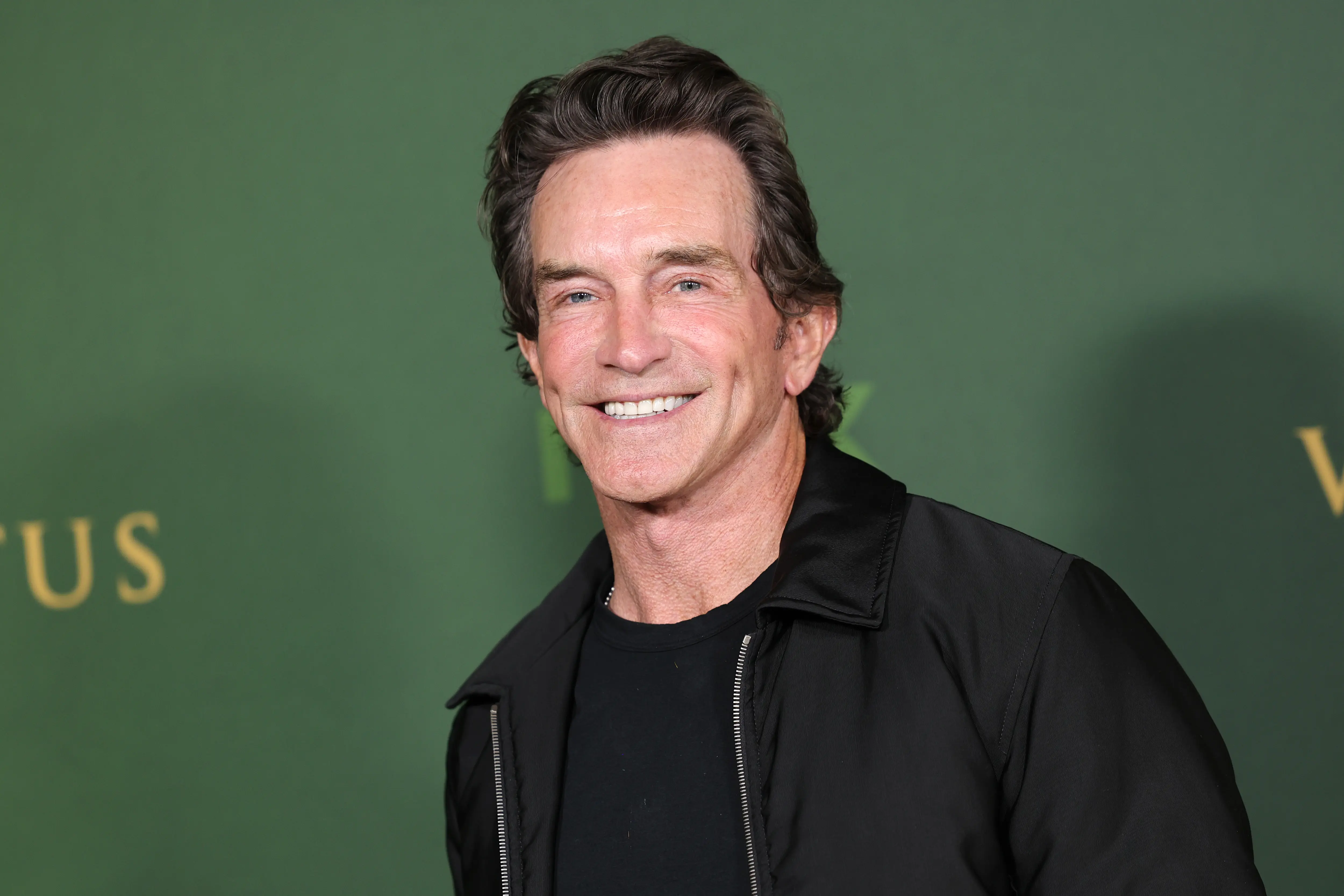 Jeff Probst (Image via Getty)
The central steward of Survivor, Jeff Probst, has often described the show as a living organism — one that evolves through experimentation and instruction, and sometimes through the sober acknowledgment that an idea did not land as intended.
His most recent reflection concerns the revamped immunity challenge in Survivor Season 49 Episode 11, a twist he now concedes did not work as planned.
The long-running series has endured precisely because of these trials, yet here Probst offers a clear summation: the mechanism designed to “elevate” a classic test delivered less spectacle and less struggle than anticipated.
Why the Season 49 Challenge twist fell short on Survivor
The challenge in question was once familiar to viewers and players alike — a delicate task requiring contestants to move back and forth while keeping a wobbly table stable enough to spell “immunity” with individual blocks.
Historically, the tension lay in their own rhythm: an unsteady hand or a hurried return could send the table tipping, undoing minutes of careful progress.
In Season 49, the table no longer wobbled. It spun. Instead of stabilizing it with a rope held in hand, players controlled the rotation by a rope fastened to their waist.
The innovation was intended to heighten difficulty as well as visual drama. Instead, according to Probst, it flattened both.
Contestant Steven Ramm completed the task quickly; Sage Ahrens-Nichols followed without much resistance.
What had once evoked strain and suspense unfolded with unexpected ease. Probst used the On Fire aftershow podcast to explain the outcome. He said,
“Even though we have classic challenges, if you can find a way to reinvent them that works, that’s great,” he said. “We have failed a couple of times in that we have messed with a great challenge, and I don’t think it was better for the change, but the only way you know that is by trying it.”
The admission underlines a foundational philosophy in Survivor: no experiment can be fully understood in rehearsal.
The show’s Dream Team — the group that tests challenges preseason — can approximate the mechanics, but not the instincts or psychology of players battling for stakes far beyond a trial run. Jeff continued,
“You can test it with Dream Teamers and all that, but sometimes you just have to put it in the game and watch what the players actually do with it, and then you go, ‘Yeah, we got it right.’ Or, ‘You know what? Let’s go back to the original.’”
The challenge twist, now categorized among those “couple of times” the show erred, serves as a reminder Probst frequently voices: Survivor thrives when risk is present not only for its contestants but also for its creators.
The conversation soon turned toward the unpredictable nature of pacing in Survivor challenges. Effort can shudder or build in ways no production meeting can foresee.
Probst noted this when answering co-host Jay Wolff. He said,
“I think I like the original better. What was interesting about this was watching what the players would do with the pace, and that is hard to predict because sometimes we do a challenge where everybody slows down, and there’s nothing you can do about it.”
Indeed, Season 49’s attempt at a reinvention revealed that the momentum of a challenge often comes from the interplay between body, object, and intention.
When that balance is disturbed, the game falters not in drama but in its essential contest of will. Probst framed this reality with an analogy to his own role:
“None of us are perfect in this. We continue to try things in the same way that I ask questions and then sometimes wish I had phrased it a different way. You got to try something. If it works, do it again. If it doesn’t, try something else.”
The host also used the moment to point forward. He expressed interest in widening participation in challenge design, not merely among producers and Dream Teamers but among fans themselves. He said,
“What I would love to do is be able to create an app where you put all of the elements from all of our challenges into the app and let fans go in and say, ‘Have you thought of this?’”
He believes audience imagination could help shape the next era of Survivor, noting,
“That’s where I’d like Survivor to go. I’d like to get more fan involvement about creating this game design of the game because anybody can do it. There’s no secret to it.”
The enduring narrative of Survivor Season 49 continues to be one of measured evolution. The series remains restless — introducing new twists, reworking older ones, and occasionally retreating to what was once proven.
The misfire of the spinning-table challenge does not dampen that pursuit; it instead reinforces a lesson Probst has echoed over decades: the show’s authenticity lies in its willingness to listen to outcome rather than intention.
Season after season, Survivor finds itself returning to its core principles — human ingenuity, endurance, and the unexpected.
The moments that fail, like those that soar, shape the mythology the show’s fanbase follows so closely. As Probst said,
“If it works, do it again. If it doesn’t, try something else.”
Season 49 will now be remembered as the place where a classic challenge briefly took a detour before the path led back to familiar ground.
Stay tuned for more updates.
TOPICS: Survivor 49 Jeff Probst , CBS
- Jeff Probst wants fans to help design future Survivor challenges
- Deleted Survivor 49 scene shows Savannah channeling her competitive roots ahead of challenge
- Who went home on Survivor season 49 week 11?
- "I am slightly panicked": Survivor 49 host Jeff Probst on Rizo's fake idol play at Tribal Council