
Scientists discover a strange lemon-shaped planet with a feature never seen before
-
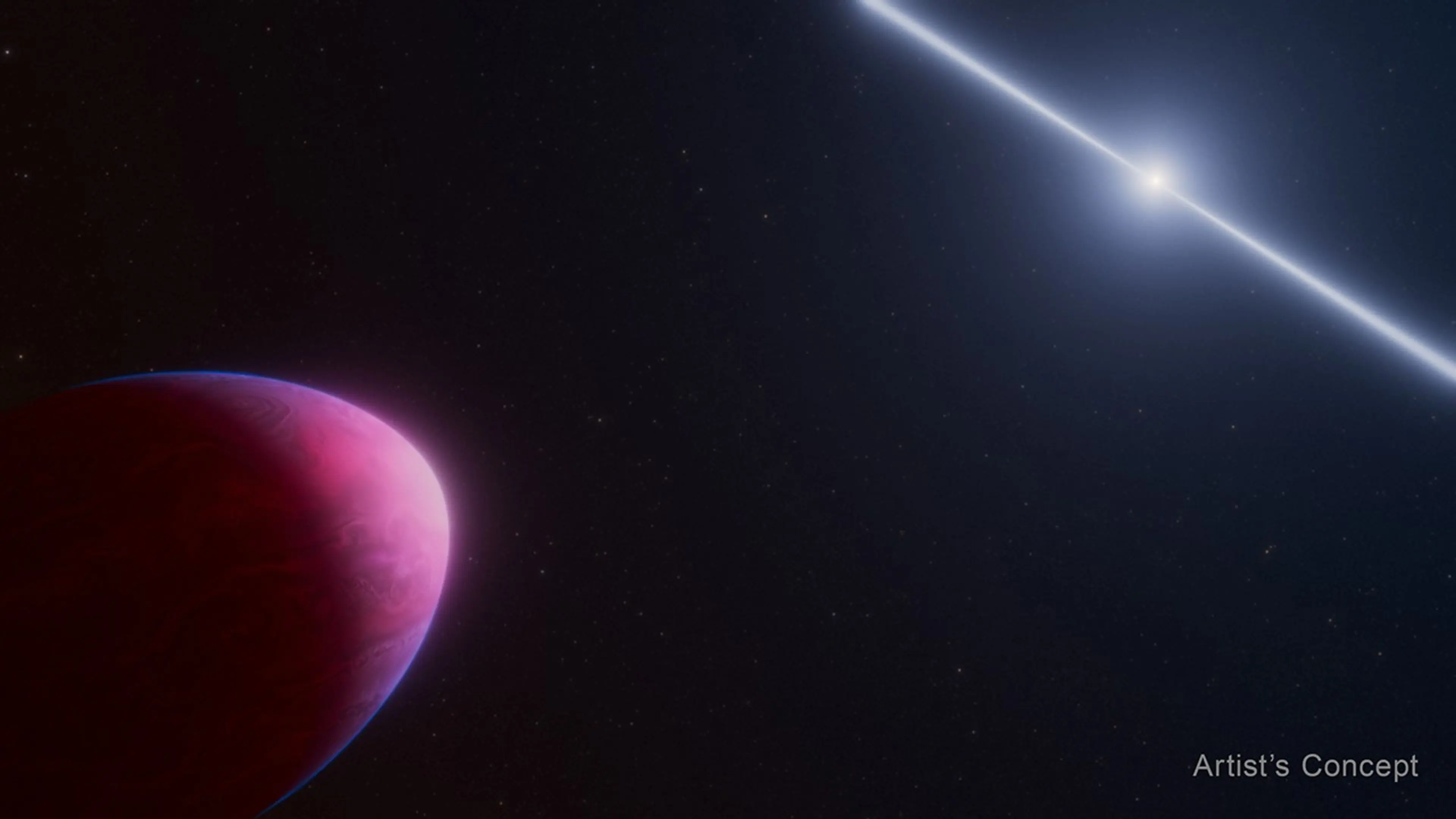 Image sourced via nasa.science.gov
It has been found that there is a planet that appears like it was taken straight from a sci-fi film. However, this one is real. It is quite distant from Earth, unlike what planets would normally appear like.
According to scientists, this planet goes against all the rules that planets are expected to observe.
The planetary name is PSR J2322-2650 b. It is located at an distance of 750 light-years from us.
The interesting thing about this planet is that it has a unique shape and atmosphere and revolves around a special type of star.
A planet that is stretched like a lemon
Most planets are round. This one is not.
PSR J2322-2650 b is pulled and stretched with a lemon-like appearance due to the immense gravity that surrounds it. The gravity is so strong that the planet cannot retain its spherical shape.
Instead, it is squeezed laterally and stretched centrally. This occurs because the planet revolves around a rather unusual star called a pulsar.
A pulsar refers to what results from a massive star which goes through a massive explosion called a supernova.
A pulsar is very small but rather heavy and powerful. It also spins very fast, thus sending strong waves of energy into space.
Orbiting a deadly star at an unbelievable distance
This planet is almost touching the pulsar star it is orbiting. It only takes about 1 million miles to go around it.
For comparison, the distance between the Sun and the Earth is about 100 million miles.
Due to such close orbiting, the time it takes to complete one year on this planet is under eight hours. This means that the planet completes an orbit around its star in just one day on our planet.
“The star's gravity and energy are so strong that they are pulling matter from the planet,” said the astronomer.
“They consider this configuration to be similar to a ‘black widow’ system,” he added.
A “black widow” system refers to a configuration that involves a strong star that steadily destroys its companion.
An atmosphere scientists did not expect
When scientists used NASA's James Webb Space Telescope to study the planet, they anticipated a world bathed in gases like water or methane.
Instead, they were shocked: The air is mostly helium and pure carbon, with hardly any oxygen or nitrogen.
"Such a mixing ratio has never before been observed on any planet," says research leader Hoechner.
Some experts think the atmosphere may be cloudy due to dark, soot-like clouds.
Deep in the body of the planet, carbon might be squeezed together by the heat and pressure.
This might even crystallize into a diamond-like structure, though this part is still a subject of study.
Extreme heat and a big mystery
The temperatures on this planet are extreme. The lower temperature area is about 1,200 degrees Fahrenheit, and the hotter area goes almost as high as 3,700 degrees.
Even with these high temperatures, the carbon is holding its position.
TOPICS: Exoplanet