
Sentinel-6B launch extends three decades of global ocean height records
-
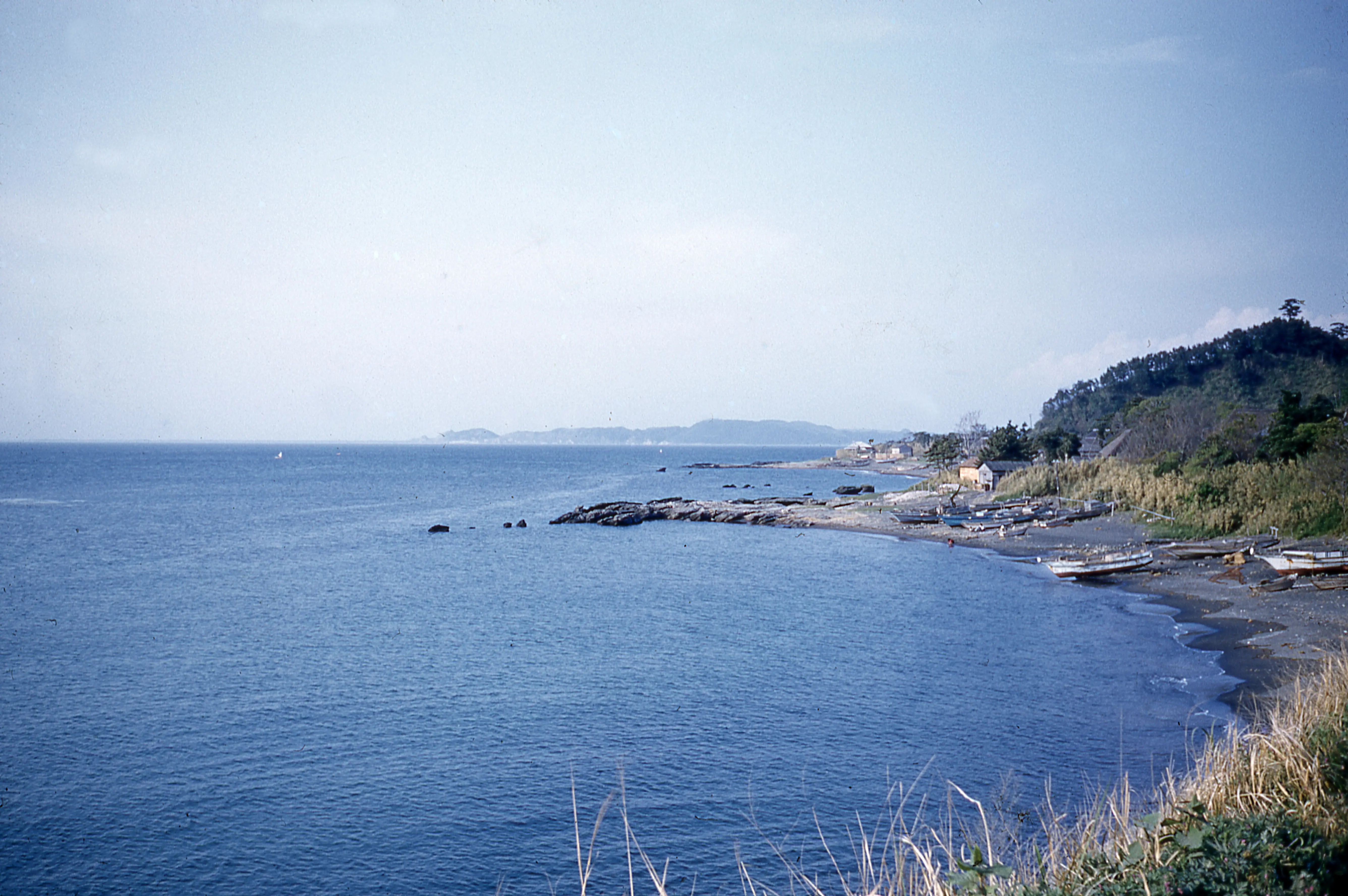 High angle view across the sea and boats lying on a beach, Japan, 1950 (Image via Getty)
On November 16, 2025, the Sentinel-6B satellite launched from Vandenberg Space Force Base in California.
According to NASA, the mission is a partnership between NASA, the National Oceanic and Atmospheric Administration (NOAA), and European partners including the European Space Agency (ESA), the European Organisation for the Exploitation of Meteorological Satellites (EUMETSAT), the French Centre National d’Études Spatiales (CNES), and the European Commission.
Sentinel-6B’s objective is to continue collecting ocean height data, extending the record started in 1992 by the TOPEX/Poseidon mission.
The mission will provide continuity with past missions and track sea level changes globally every 10 days.
Continuing Three Decades of Ocean Height Monitoring
Sentinel-6B Payload
Sentinel-6B carries instruments similar to its predecessor, Sentinel-6 Michael Freilich.
A Radar Altimeter measures the distance to the ocean surface, while an Advanced Microwave Radiometer (AMR) retrieves water vapor data to correct radar measurements.
Other instruments, including Doppler Orbitography by Radiopositioning Integrated on Satellite (DORIS) and a Laser Retroreflector Array, determine the satellite’s position.
S- and X-band antennas transmit data to Earth, and a solar array provides power.
The satellite also contains a Global Navigation Satellite System Radio Occultation (GNSS-RO) instrument, which collects atmospheric data to support weather prediction models.
These instruments together enable precise ocean height measurements and atmospheric observations.
Measuring Ocean Height
Sentinel-6B marks the next chapter in the ocean monitoring satellites that provide measurements of sea level very accurately, within centimeters.
The satellite sends radar signals to the ocean surface and then calculates the height of the sea using the time it took for the signal to return and the position of the satellite.
The information on height is used for the calculations of oceanic currents, tides, and heat in the oceans' distribution.
The satellite is a source of data for the OSCAR database (Ocean Surface Current Analyses Real-time), which every day globally estimates the surface currents.
In addition to that, the readings made from this satellite help to monitor the thermal expansion and contraction of ocean water, which in turn gives an idea of temperature fluctuations and heat storage.
Additional Science Applications
The operation of Sentinel-6B for a minimum of five years is planned, which will overlap with other missions monitoring the ocean.
The GNSS-RO device records temperature and humidity in the upper atmosphere and thus aids the world climate models.
The information generated from Sentinel-6B will be beneficial in observing the changes in sea levels in different regions, impacts on the coast, and the long-lasting patterns in the movement and distribution of energy in the ocean.
The satellite will be a source of information for the operational forecasting of ocean conditions for the shipping and fishery sectors.
In addition, the detections made by Sentinel-6B will also be used in the research of international scientists that is linked to climate change and its impact on oceanic systems.
Tracking ENSO and Ocean Changes
The measurements of the ocean height are important to the El Niño–Southern Oscillation (ENSO) studies.
The eastern tropical part of the Pacific Ocean's raised sea levels during El Niño events signify warmer waters, while lower sea levels are associated with La Niña events.
The fluctuations of sea levels are being monitored and supported by the observations from the Sentinel-6B satellite.
It also monitors the long-term trend in sea level. The rise in global sea level has been over 10 cm since the early 1990s.
The rise is mainly due to the warming and expansion of ocean water plus the melting of glaciers and ice sheets.
The mission of Sentinel-6B will be to monitor these changes and keep on the flow of global mean sea level records.
Sentinel-6B operates under the umbrella of the Sentinel-6/Jason Continuity of Service, a mission that takes on the legacy of the TOPEX/Poseidon, Jason-1, Jason-2, and Jason-3 missions.
The measurements from Sentinel-6B will continue to provide the oceanographic dataset until the end of the 2020s, covering sea-level, ocean circulation, and atmospheric studies.
As per the information given by NASA, the satellite deployment ensures an ocean height record that not only supports but also enhances operational forecasting, climate monitoring, and scientific inquiry.
Stay tuned for more updates.
TOPICS: Sentinel-6B satellite, ENSO and ocean changes, global ocean height record, ocean altimetry data, sea level monitoring