
The true story behind Netflix’s Fugue State 1986
-
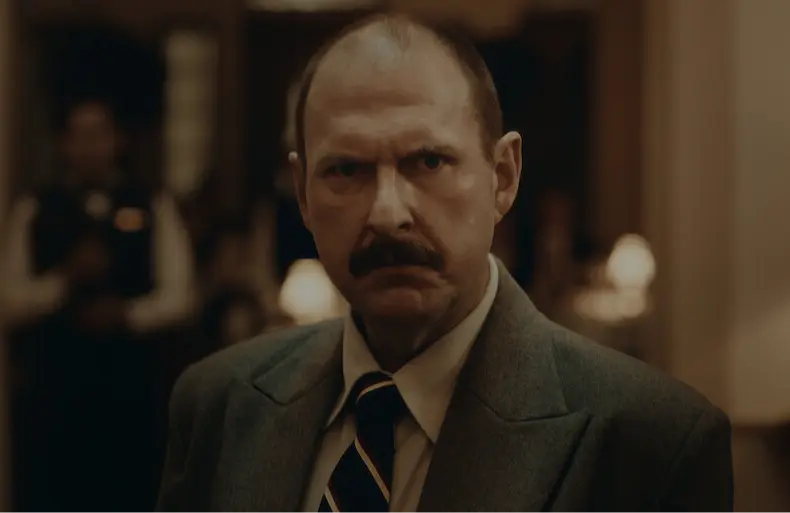 Fugue State 1986 (Image via Netflix)
In the 1980s, Bogotá, amid the shadows of drug wars and political unrest, a single day shattered the fragile calm of the city. On December 4, 1986, Campo Elías Delgado Morales, a 52-year-old English teacher claiming to have served in the Vietnam War, went on a spree of violence that killed 29 and wounded at least 12 more.
Beginning in his apartment building, where he first killed his mother and several neighbors, Delgado's rampage went on to a student's home and ended after a seven-hour shoot-out at the upscale Pozzetto restaurant. Described as eerily calm by witnesses, Delgado was finally brought down by police gunfire.
Entrenched in the history of Colombia as the Pozzetto Massacre, it ripped open vivid undercurrents of personal trauma and mental health issues that had yet to be dealt with in a nation already torn apart by conflict. The limited Netflix series Fugue State 1986, original title Estado de Fuga 1986, dramatizes this true tragedy through the killer's psychological unraveling and a twisted intellectual bond that enables his descent.
Fugue State 1986 premieres on Netflix globally on December 4, 2025, available in various languages and subtitles.
Fugue State 1986: The early Life of Campo Elías Delgado
Campo Elías Delgado Morales was born on May 14, 1934, in the small town of Chinácota in the Norte de Santander department, Colombia, to Venezuelan parents Elías Delgado - a merchant, and Rita Elisa Morales. When he was seven years old, his childhood took a turn for the worse when his father committed suicide by shooting himself in 1941. This event gave him a scar; later on, Delgado would blame his mother for this tragedy, and that resentment stayed repressed for decades, influencing his later behavior.
An excellent student with early promise, Delgado briefly studied medicine at the National University of Colombia but never graduated. The economic privations and consequent political turmoil from the 1950s onward impelled Delgado to seek his fortunes elsewhere. He emigrated to New York City as a refugee, working odd jobs and claiming service in the U.S. Army during the Vietnam War, though official records remain unclear on the extent of his involvement, as per the BBC.
By the early 1970s, after a street altercation with a thief in the U.S., Delgado returned to Bogotá. He settled into a quiet life, supporting himself by teaching private English lessons to affluent students in the city's Chapinero neighborhood. He also pursued graduate studies in literature at the Pontifical Javeriana University, immersing himself in works by authors like Fyodor Dostoevsky and Friedrich Nietzsche.
Friends and acquaintances reported an increasingly isolated, embittered individual with signs of paranoia and social withdrawal during his final years. He was a solitary individual in a modest apartment, always carrying a .38 revolver and a hunting knife for protection, and he appeared to have little interest in the development of close relationships outside his school.
No mental health treatment has been documented, but there are retrospective accounts that suggest the possibility of untreated trauma regarding the death of his father and events abroad, according to the BBC.Delgado's sister, who had strained relations with him, would later recount family conflicts about the division of inheritance. It is against this silent instability that the eventual violence sets in, putting into perspective how personal disgruntlements may fester, often unnoticed, in daily life.
The rampage: A timeline of the December 4 massacre in Fugue State 1986
The violence began surreptitiously on December 3, 1986, when Delgado visited a Banco de Bogotá branch at noon to close his account. He withdrew approximately 50,000 Colombian pesos and insisted on receiving the final centavo. That would later underline his compulsive behavior. The next day, at about 2 p.m., he returned to his apartment building in eastern Bogotá's Chapinero district. There, he sought out his 76-year-old mother, Rita Elisa, stabbed her multiple times before dousing her body in gasoline and setting it alight.
The fire set off the building's alarm, bringing neighbors out into the hallway. As they were attempting to flee, Delgado opened fire with his revolver on six residents in execution style; among them were an elderly couple and a young child. He murdered nine people in this building in total, as per the Washington Post. About 4 p.m., Delgado walked to an apartment nearby where he was privately tutoring English.
Posing as a concerned teacher, he lured his 19-year-old student, Beatriz Moreno, and her mother, Inés, outside by stating a fire emergency. He tied them up, then stabbed and shot both of them, adding two more victims to his count. He then walked a mile to the sophisticated Pozzetto restaurant, popular with Bogotá's middle class. About 8 p.m., after ordering and eating spaghetti with wine, paying his bill politely, Delgado pulled his weapon and opened fire into the crowd. More than 20 shots were fired, killing 18 diners and staff as he reloaded methodically, gunning down tables amidst screams and chaos. Eleven others were injured, some gravely.
Police arrived quickly after emergency calls; Delgado exchanged fire in the street, wounding two officers before being fatally shot in the head by Sgt. Luis Felipe Herrera, at about 9 p.m. Autopsies showed no drugs or alcohol in his system, and his notebook contained cryptic notes on literature and purification. The seven-hour spree over three sites left in its wake a spate of close-range executions and stabbings that have forever marked December 4 in Colombia's collective memory, as the BBC reported.
Aftermath: Investigation and lasting echoes
Bogotá woke up in a nightmare on December 5, 1986. For days after, the city was put under a state of emergency as forensic teams did their rounds, processing the blood-soaked scenes. The death toll stood at 29, including Delgado, although initial reports were slightly different because there was utter chaos: some outlets cited 28 or 30 as connections to related killings emerged. Subsequent police investigations showed no political or narco ties; it was ruled a personal psychotic episode driven by grudges he had harbored for many years, especially with his mother, as per The Washington Post.
Delgado's revolver and knife accounted for most of the deaths, although there was some speculation over whether police gunfire contributed to casualties at Pozzetto. His sister claimed the family inheritance, amid brief legal disputes, while survivors recounted the gunman's ghostly composure to global media. The massacre amplified calls for mental health reforms and stricter gun controls in Colombia, a country gripped by guerrilla conflicts and cartel violence.
The country mourned as the injured were treated in hospitals, and thousands attended the funerals. Abroad, it was covered as a blunt reminder of how vulnerable cities were, meriting editorials about trauma, according to The Washington Post.
Watch Fugue State 1986 on Netflix.
TOPICS: Netflix
- Love Is Blind: Italy reunion sees Davide address the house-key controversy
- Where the Culinary Class Wars season 2 chefs cook when the cameras are off?
- Netflix documentary Elway sheds a new light on the career of John Elway
- Culinary Class Wars: Seoul Mother breaks down her elegant Seoul-style set meal from the first elimination round