
Where was The Testament of Ann Lee filmed? All filming locations revealed
-
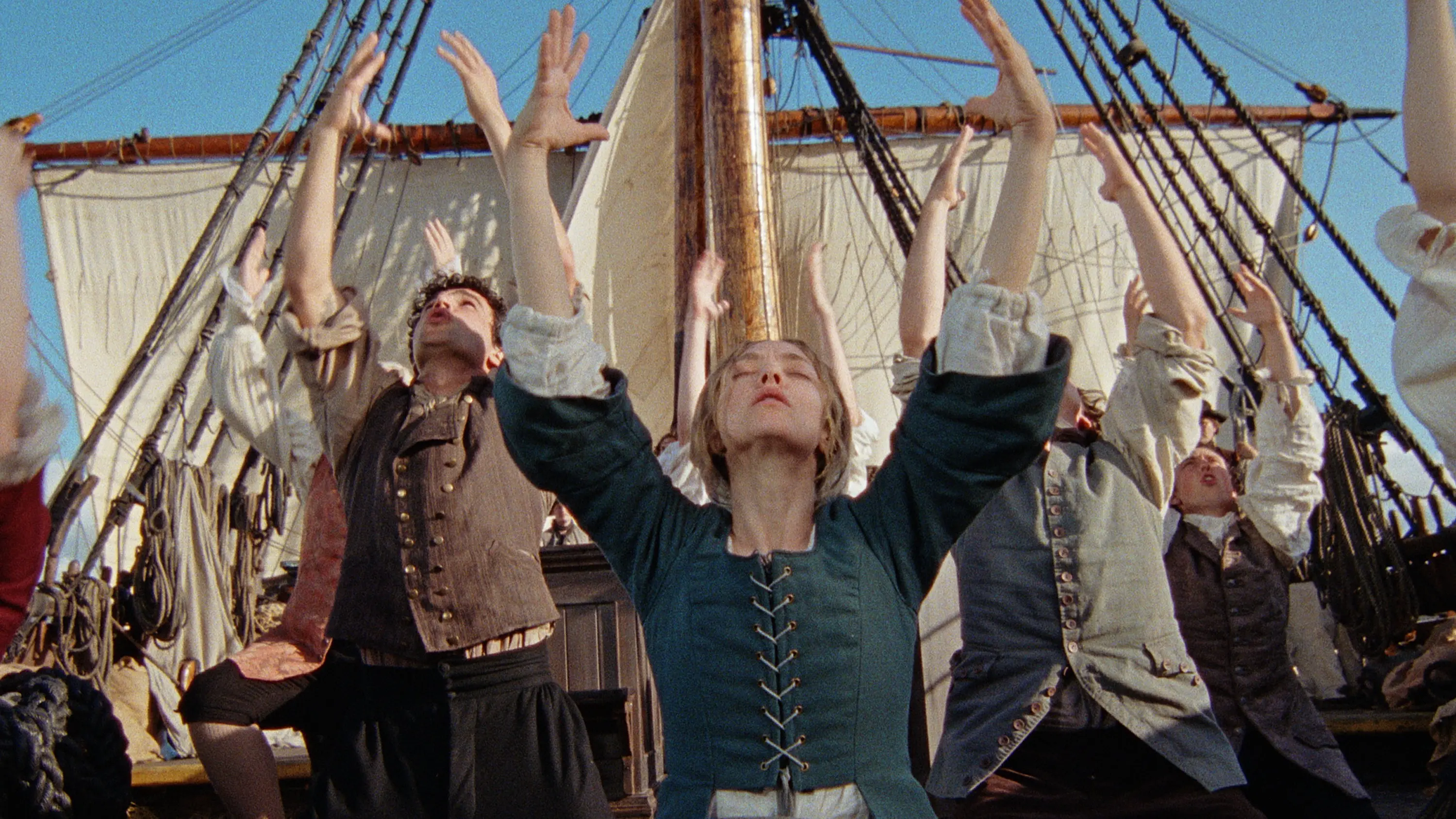
Grounded in painstaking historical detail, The Testament of Ann Lee uses its filming locations to immerse viewers in the lived realities of an 18th-century religious movement. The film follows the spiritual and communal journey of Ann Lee, the founder of the Shakers, tracing her life from industrial England to the forests of early America.
The film prioritizes physical spaces, hand-built sets, and real locations to reflect the Shakers’ belief in labor as devotion.
Director Mona Fastvold and her creative team approached the film’s locations as narrative tools. Every structure, road, and interior was designed to show how belief systems shape the way people live, move, and build.
The article further explores the locations used for filming and also provides additional details related to the film.
The real places that became Ann Lee’s world
According to IMDb, most of The Testament of Ann Lee was filmed in and around Budapest, Hungary, which served as the production’s primary hub with principal photography taking place in December 2024.
The city’s established infrastructure for period filmmaking allowed the crew to construct expansive backlot sets while remaining close to rural land needed for large-scale exterior builds.
Budapest doubled for both 18th-century Manchester and early American settlements, depending on how the sets were dressed and framed.
The Manchester sequences were shot on studio backlots where the production erected weathered Tudor-style buildings and narrow cobblestone streets.
Production designer Sam Bader described his approach to recreating the era in an interview with Architectural Digest:
“The challenge of excavating a reality out of a pre-photographic era for film energized me from the outset.”
Bader’s research process relied on paintings, engravings, and historical texts rather than photographic references. Influences included artists like William Hogarth, whose work helped define the earthy palette and lived-in texture of the Manchester scenes.
“I like to ingest as much imagery and text as possible and to sort of catalog it and be very free associative with what I choose,” he explains.
The goal was not visual polish, but authenticity.
As the story moves to America, the film’s visual language opens up. A large rural property roughly an hour outside Budapest became the primary site for constructing the Shaker settlement. Homes, workshops, and communal spaces were built by hand, mirroring Shaker values of simplicity, craftsmanship, and collective effort.
Bader emphasized that the physical process of building was meant to register on screen. He explained further in the same interview:
“I hope people are really left with a strong impression of how the land was lived off of, and trees were felled and dissected and squared off, and how homes were built.”
One of the most ambitious sets was the Shaker congregation hall. Rather than constructing it entirely from scratch, the production repurposed an existing barn structure on the property.
A separate exterior structure was built nearby to complete the illusion of a freestanding building. For the transatlantic journey that brings Ann Lee and her followers to the New World, the filmmakers traveled to Gothenburg, Sweden.
Shipboard scenes were filmed aboard the Götheborg, a fully operational replica of an 18th-century East Indiaman ship.
In addition to European locations, the film shot a limited number of scenes at the real Hancock Shaker Village in Massachusetts as well.
What is The Testament of Ann Lee all about?
The Testament of Ann Lee is a 2025 historical musical drama directed by Mona Fastvold and co-written with Brady Corbet.
The film stars Amanda Seyfried as Ann Lee, the 18th-century religious leader who became known as “Mother Ann” to her followers. The synopsis for the film, as per Searchlight Pictures’ website, reads:
“From award-winning writer-director Mona Fastvold (The World to Come, The Brutalist) comes the extraordinary true legend of Ann Lee, founder of the devotional sect known as the Shakers. Academy Award nominee Amanda Seyfried stars as the Shaker's irrepressible leader, who preached gender and social equality and was revered by her followers. The Testament of Ann Lee captures the ecstasy and agony of her quest to build a utopia, featuring more than a dozen traditional Shaker hymns reimagined as rapturous movements.”
Haunted by the loss of her children and driven by a belief in gender equality, communal living, and pacifism, Ann gathers followers who come to see her as a spiritual figure of profound authority.
Worship in the film takes the form of ecstatic song and dance, woven into the narrative rather than presented as traditional musical numbers.
The supporting cast includes Thomasin McKenzie as Mary Partington, Lewis Pullman as William Lee, Stacy Martin as Jane Wardley, Christopher Abbott as Ann’s husband Abraham, and Tim Blake Nelson as Pastor Reuben Wright. Each character represents a different response to Ann’s radical beliefs, from devotion to skepticism.
The Testament of Ann Lee is now available in select theaters in the United States.
TOPICS: The Testament of Ann Lee