
Who were Betty Reid Soskin's parents? Family details explored as America's oldest park ranger dies at 104
-
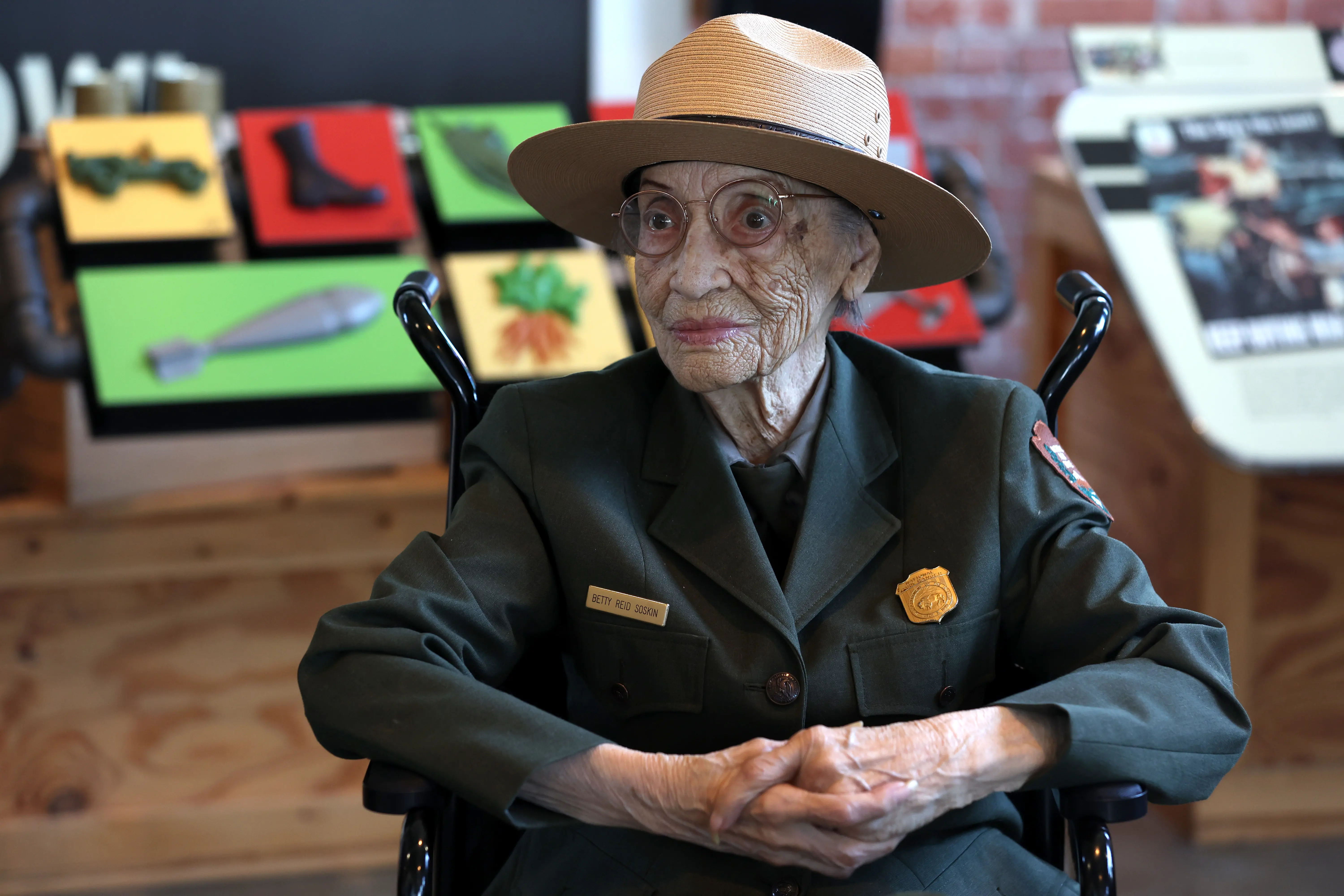 Betty Reid Soskin, the oldest full-time National Park Service ranger in the United States, looks on during a news conference announcing her retirement at the Rosie the Riveter/World War II Home Front National Historical Park on April 15, 2022 in Richmond, California. Betty Reid Soskin retired on March 31 after a decade and a half of serving as a National Park Ranger at the Rosie the Riveter/World War ll Home Front National Park where she shared her personal experience with other women who worked on the World War II home front. (Photo by Justin Sullivan/Getty Images)
Betty Reid Soskin, known as the oldest active ranger to ever serve in the National Park Service, passed away at 104 on Sunday in her California home. Her family confirmed her passing through a statement posted on her social media.
While people have been paying their respects for her contributions to public service and history, there’s also growing curiosity about her early life and family roots.
R.I.P. — Betty Reid Soskin, oldest National Park Service ranger, dead at 104 pic.twitter.com/XBpBSCDKnL
— Breaking911 (@Breaking911) December 21, 2025Betty Reid Soskin came into the world as Betty Charbonnet on September 22, 1921, in Detroit. Later, her family moved back to New Orleans. Her father, Dorson Louis Charbonnet, worked as a builder like his own father before him.
Her mother, Lottie Breaux Allen, came from a mix of African, French, and Spanish backgrounds. Growing up with this rich cultural heritage, Soskin began to think about identity, history, and inequality in her life.
When a terrible flood wrecked their home in New Orleans, Soskin and her family moved to the San Francisco Bay Area. She was six years old at the time. Living there put her in the middle of an area that would go on to shape her life in many personal and professional ways.
Betty Reid Soskin’s world war II experience and path to National Park Service Ranger
During World War II, Soskin aimed to help with the war effort in Richmond, California, a key center for shipbuilding. She applied to join the boilermakers’ union, which provided workers to the shipyards. The union's segregation, however, placed her and other Black women in an auxiliary unit, assigning them clerical roles far removed from actual shipyard work.
In 2007, while speaking to The San Francisco Chronicle, she reflected on that time and said,
"I never had a sense of being anyone other than pushing papers. I wasn’t even always sure who the enemy was."
Years later, those moments influenced her efforts to save overlooked stories from wartime. In 2000, Soskin worked as an aide to California Assemblywoman Dion Aroner and helped develop the Rosie the Riveter/WWII Home Front National Historical Park in Richmond.
She later shared with Newsweek in 2020 that she was the only person of color at first planning meetings. “And as I began to introduce my part of the work, it was very clear that many of the stories of Richmond during the war were not being told,” she said.
Soskin started working as a consultant to the park in 2003 and became a National Park Service ranger in 2007 when she was 85. She gained recognition for telling stories about African American, Japanese American, Latino, Native American, and LGBTQ communities impacted by wartime policies and prejudice.
By carrying forward her parents’ heritage and through her own contributions, Betty Reid Soskin connected different eras of American history.
She left behind a powerful legacy grounded in family public service and the stories of those who came before her.
TOPICS: Betty Reid Soskin