
Features
Avi Loeb reiterates scientific caution in assessing the nature of 3I/ATLAS
Harvard Professor Avi Loeb maintains a cautious scientific approach to 3I/ATLAS, highlighting anomalies, the Loeb Scale ranking, and upcoming observations around Earth and Jupiter for further analysis.
-
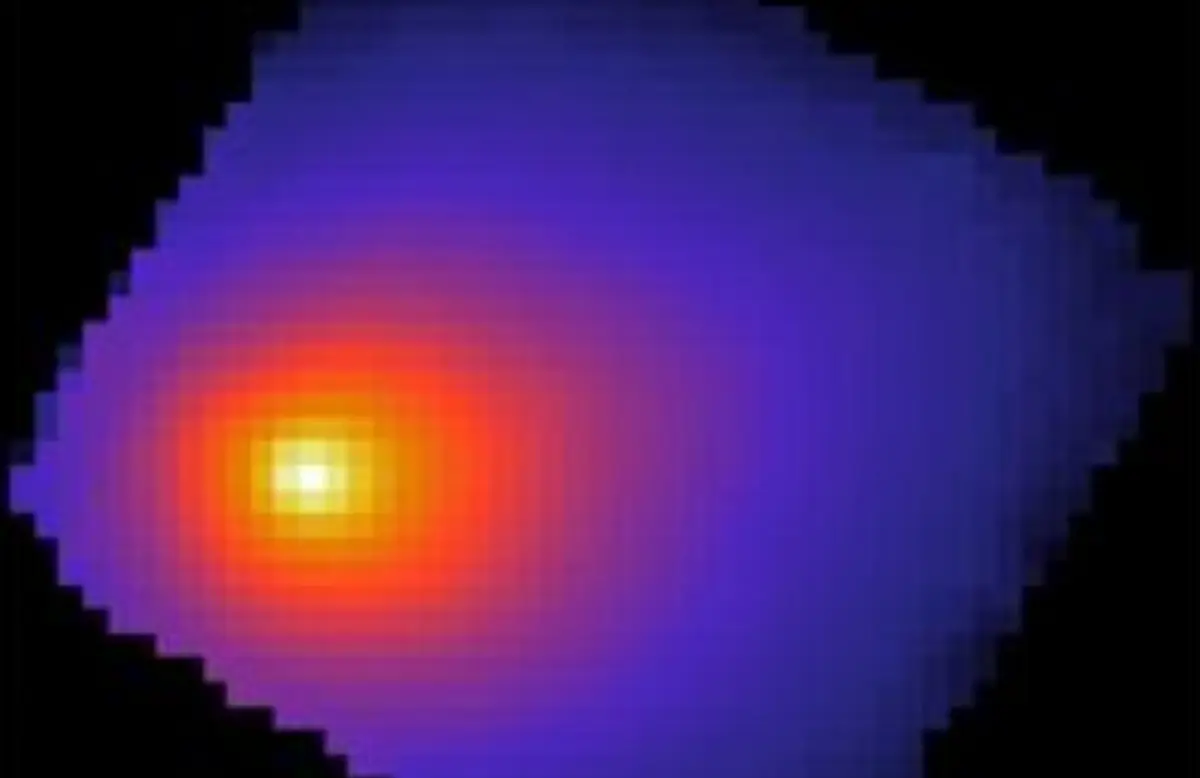 Comet 3I/ATLAS (Image via NASA)
In his recent blog post on Medium, Harvard Professor Avi Loeb has emphasized a cautious scientific approach regarding the nature of 3I/ATLAS.
Loeb stated that the object is most likely a natural comet, but he has consistently maintained that its anomalies require careful monitoring.
Since the discovery of 3I/ATLAS in July 2025, Loeb ranked it as 4 on the Loeb Classification Scale, which quantifies interstellar objects from 0 for natural icy bodies to 10 for alien technology.
He has declined to update this rank until new data around its closest approach to Earth are publicly released and analyzed.
Loeb Classification Scale and its application
The Loeb Classification Scale is a quantitative system that ranks interstellar objects based on their characteristics.
It was initially published in two peer-reviewed articles and later expanded in a new paper to allow evolving rankings as additional data become available.
Loeb applied the scale to 3I/ATLAS shortly after its discovery, identifying eight anomalies in October 2025. The number of anomalies has since increased to 15.
The classification encompasses technological capabilities to account for low-probability but high-impact events, consistent with the practices adopted by intelligence agencies following major global incidents.
Loeb’s public statements, peer-reviewed publications, and essays consistently reflect this methodology.
Current standpoint on 3I/ATLAS
In a NewsNation interview with Elizabeth Vargas, Loeb reiterated that 3I/ATLAS is most likely a natural object, a position consistent with his publications and essays dating back to July 2025.
In response to a reporter’s question on October 29, 2025, Loeb stated that the object is likely a natural comet but noted eight anomalies that gave it a Loeb Scale rank of 4.
He has maintained that the technological interpretation cannot be dismissed due to potential black swan events with low probability but high implications.
Loeb emphasized that no new data have yet prompted a revision of the Loeb Scale rank.
He also noted that the ranking may change once observational data from the period around its closest approach to Earth and Jupiter are fully analyzed, indicating that his assessment is contingent on upcoming empirical evidence.
Upcoming data and analysis
The most informative data on 3I/ATLAS are expected from observations around its closest approach to Jupiter on March 16, 2026.
Loeb highlighted that measurements of the anti-tail jet, which extends across a million kilometers toward the Sun, could clarify its origin.
Spectral analysis could determine whether the jet results from sublimation of natural ice pockets, producing CO2, CO, and H2O gases at hundreds of meters per second, or from a technological thruster, which could produce anomalous composition and higher exhaust speeds.
Additional indicators could include the release of smaller objects near Jupiter or the detection of artificial lights or unexpected maneuvers, which would suggest a technological signature.
In the absence of such signatures, Loeb intends to revise the Loeb Scale rank downward.
Scientific process and reliability
Loeb stressed that scientific evaluation relies on systematic data collection and analysis rather than media coverage.
He stated that the NewsNation interview reiterated his previously published arguments and that no fundamental change in his standpoint has occurred.
Future conclusions regarding the classification of 3I/ATLAS will depend entirely on the release and assessment of new observational data in the coming months.
He also noted that coordination among international observatories and space agencies will be crucial in gathering comprehensive measurements of 3I/ATLAS, ensuring that conclusions are based on multiple independent observations.
Stay tuned for more updates.
TOPICS: 3I/ATLAS, 3I/ATLAS comet, 3I/ATLAS observations, 3i/ATLAS recent updates, Avi Loeb 3I/ATLAS
More 3I/ATLAS
on Primetimer:
- ESA’s Juice spacecraft observes comet 3I/ATLAS ahead of delayed science data return in 2026
- 3I/ATLAS as a cosmic messenger: Avi Loeb on the future of interstellar time capsules
- What did President of Russia Vladimir Putin say about 3I/ATLAS? Details explored
- Avi Loeb reflects on what 3I/ATLAS reveals about humanity’s place in the universe