
Blue Origin to launch first-ever wheelchair user into space on December 18
-
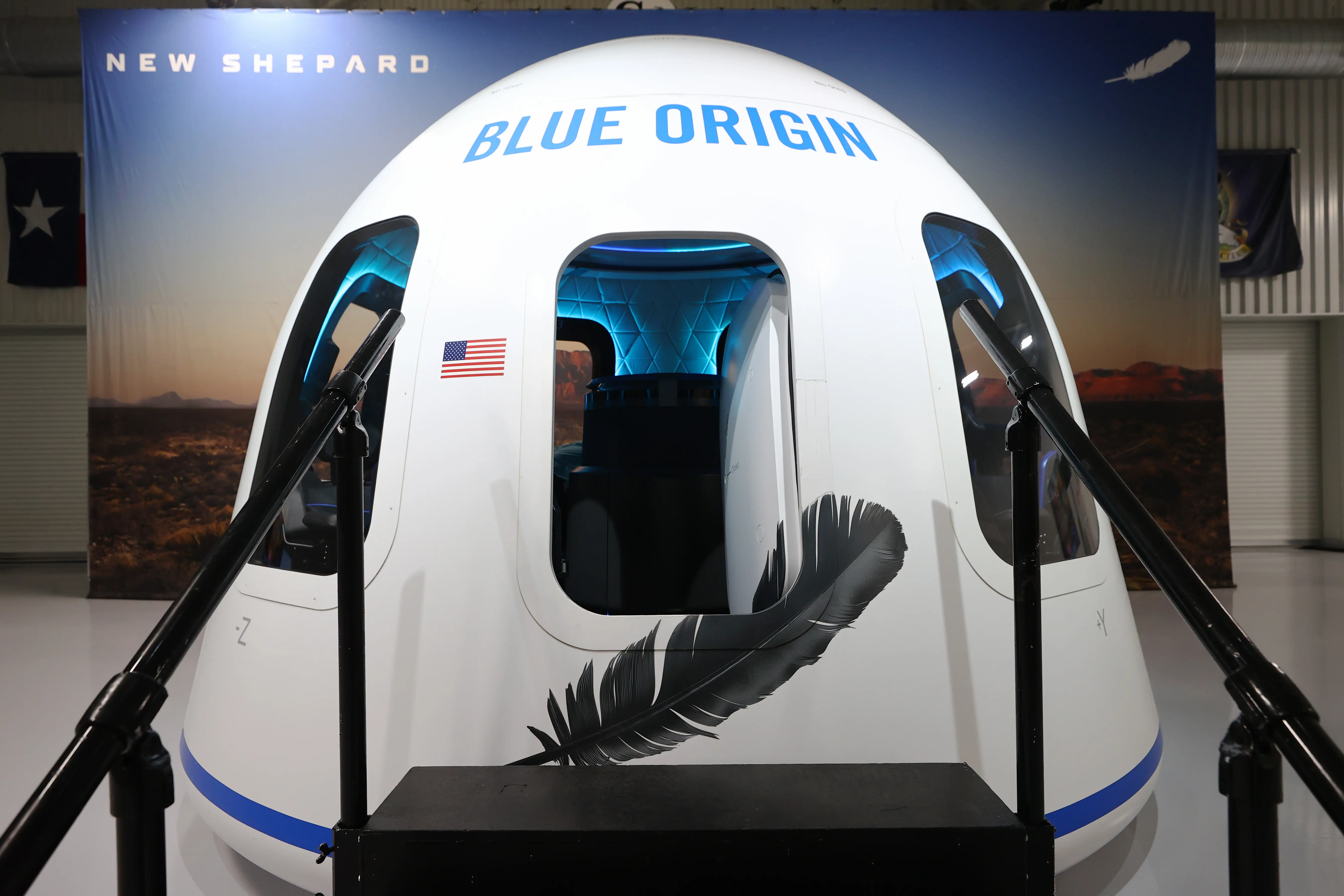 A full-size replica of Blue Origin's crew capsule (Image via Getty)
Space.com reports that Blue Origin is preparing for a launch on Dec. 18 that will include the first spaceflight by a wheelchair user.
The mission, called NS-37, will lift off from the company’s West Texas site during a morning launch window that opens at 9:30 a.m. ET. Blue Origin plans to stream the event about 40 minutes before liftoff.
The flight will use the company’s New Shepard system, a reusable rocket and capsule that travels to suborbital space.
The trip takes about 10 to 12 minutes from start to finish, giving passengers several minutes of weightlessness before the capsule returns to Earth.
One of the six passengers is Michaela (Michi) Benthaus, an ESA aerospace engineer who uses a wheelchair after a spinal cord injury in 2018. Her role on this flight marks a moment for access and space travel inclusion.
The rest of the crew includes Joey Hyde, Hans Koenigsmann, Neal Milch, Adonis Pouroulis, and Jason Stansell. Blue Origin has also released the mission patch and explained the meaning of each symbol linked to the crew.
The company notes that the purpose of these elements is to reflect personal stories, scientific work, and the mission’s focus on access to space.
NS-37 crew and mission details
The NS-37 crew includes six passengers with links to engineering, investment, and science fields. Blue Origin states that the symbols on the mission patch are connected to each person.
The company says, “The hippo represents Michaela Benthaus’ favorite animal,” and notes that her plush hippo will fly with her. Another symbol, the tennis ball, marks one of her early interests before her injury.
Joey Hyde’s symbol is a spiral galaxy connected to his work in astrophysics research. Adonis Pouroulis is represented by a baobab tree tied to his home country.
Neal Milch is represented by a DNA symbol tied to his interest in science. Jason Stansell’s elements include a “dog-bone shape” and “stars in the crew capsule windows” used to reference the number 201 and the letter K, which are connected to his brother.
The New Shepard system will fly the group to suborbital space, giving them a short period of weightlessness. The rocket and capsule will then return independently, as both are made for reuse.
This will be the 37th flight of New Shepard. Blue Origin continues to use these flights for research payloads and human spaceflight. The company also highlights its aim to widen access to space through future missions.
Launch plan and background information
The NS-37 mission is scheduled for Dec. 18 with a target launch time of 9:30 a.m. ET. The launch window opens at that time, and Blue Origin will begin live coverage about 40 minutes before the rocket leaves the pad.
The flight will take place from the company’s West Texas facility, where previous New Shepard flights have also launched.
Hans Koenigsmann, one of the six passengers, is known for his years at SpaceX. He joined the company in 2002 and later served as vice president of build and flight reliability.
He often spoke during launch events and press briefings. His presence on this mission links past and current developments in private spaceflight.
New Shepard flights follow a similar pattern: a vertical launch, a short climb above the Kármán line, a period of weightlessness, and a capsule landing under parachutes.
The rocket lands separately under engine power. Blue Origin uses this system for human spaceflight and the transport of science payloads.
The company also released the mission patch for NS-37, along with background on each symbol. Blue Origin explains that “the shards represent the company’s commitment to breaking down barriers to accessing space,” including cost, nationality, and ability.
Stay tuned for more updates.
TOPICS: Astronomy, Blue Origin, Blue Origin Mars mission, NS-37