
Comet Lemmon lights up Hawaii’s night sky in rare Milky Way portrait
-
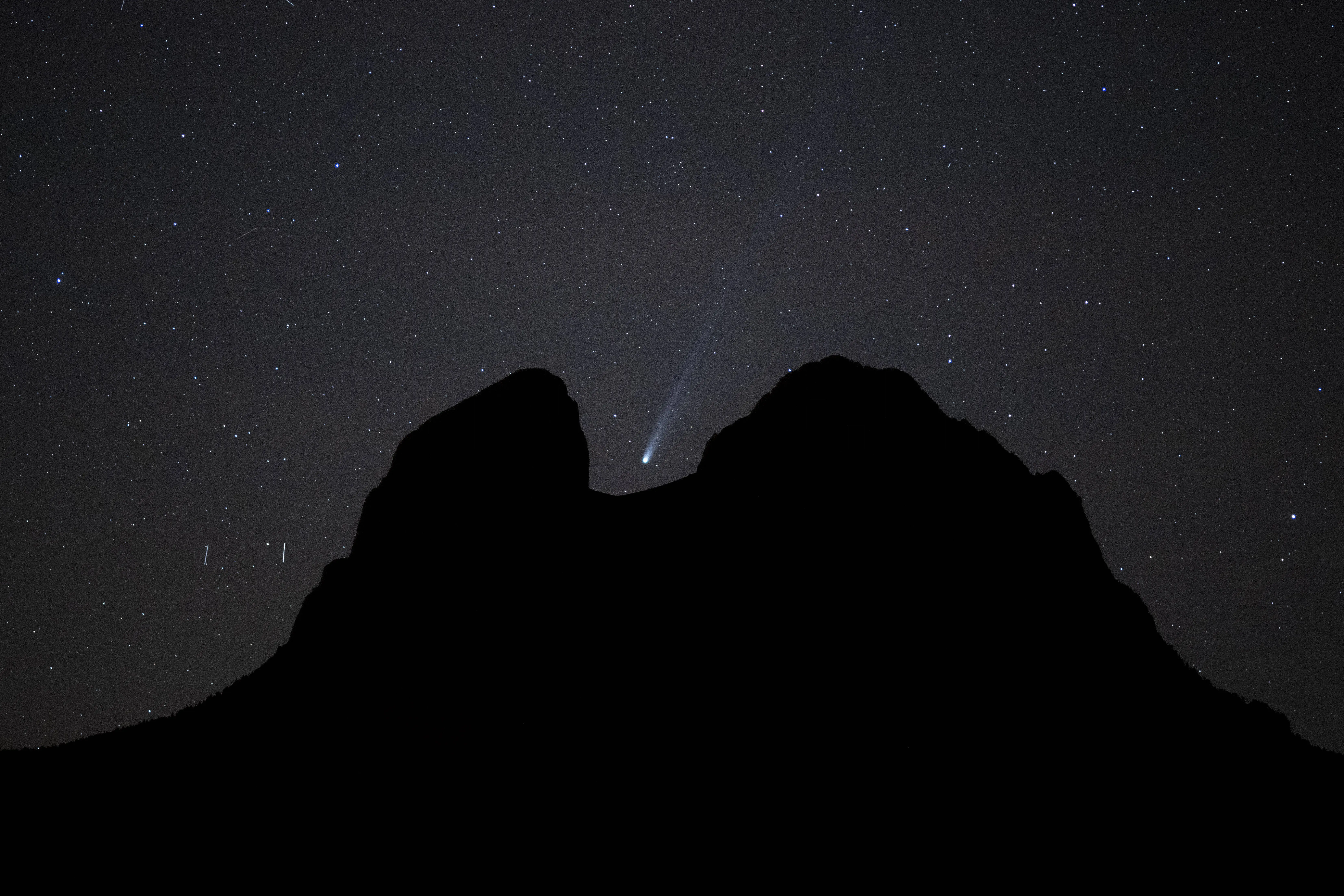 The comet C/2019 U6, Lemmon (Image via Getty)
Space.com reported that a new image of Comet Lemmon was released after it was captured from the summit of Mauna Kea in November 2025.
The comet, listed as C/2025 A6, had passed closest to Earth in late October and reached a brightness level similar to Uranus. This level meant people in some suburban areas were able to see it without equipment.
The report stated that the image also showed the Milky Way above the peak, made possible by the low light around the mountain and the high elevation.
The image came from the International Gemini Observatory under NOIRLab. It showed a thin white streak made by the comet as it moved through the sky during a long exposure.
The comet’s current orbit indicated that it would not return for about 1,350 years, giving the image value for long-term sky records.
The coverage placed the photo within a wider set of sky updates that track visible events. The information focused on when the image was taken, how bright the comet had become at that stage and why the location supported a clear record. The goal was to give context for readers who followed ongoing reports about comet activity and night-sky events through the year.
How the image was captured and processed
The released material explained how the observatory documented the comet’s motion across the sky. A member of the imaging team said the exposure “recorded the comet’s track during a stable window at the summit.”
Another person who worked on the frame said the Milky Way in the background “provided a fixed point for aligning the comet’s movement with surrounding stars.” These statements outlined the method used to create a clear and usable record.
The image was taken in November 2025, when the comet had already brightened enough to be seen from some areas without optical tools. The faint streak on the right side showed the comet’s position during the exposure period.
The outline of the observatory dome and nearby terrain helped confirm location and scale.
A project summary noted that the team produced a processed version for public release. One note stated that the purpose was “to add the pass to long-term reference records.”
The processed frame allowed the comet’s position and brightness at that moment to be compared with observations from other sites. The observatory shared the image to support both public viewing and future research that may rely on consistent visual documentation.
Why does the event matter for long-term tracking
The comet’s path through the inner solar system matched a long orbit estimated to last more than a thousand years. It was first identified in January 2025 and passed Earth at its closest point in late October.
A researcher involved in early modeling said the timeline “fit the expected pattern for long-period objects.” Current estimates placed its next return around the year 3375, making the 2025 pass one of the few points available for detailed recording.
Mauna Kea’s summit played a central role in producing the clear frame. The height and reduced surrounding light allowed both the comet and the Milky Way to appear in the same image, giving researchers a stable reference for comparison.
Long-term sky programs often rely on these stable reference points to track changes in motion, brightness, or structure.
Reports linked the image to ongoing efforts to document comet behavior during close passes. Comets often changed brightness as they approached or moved away from the sun, and these changes were useful for future models.
A statement from the observatory noted that each pass “helps build a baseline for later measurements.” The 2025 image added one more entry to the record, showing where the comet was and how it behaved during its brief visibility window.
Stay tuned for more updates.
TOPICS: Astronomy, Comet, Comet Lemmon, Gemini Observatory, Milky Way