
ScienceAlert reports on new research showing that Earth’s seasonal cycles do not occur at the same time across regions, even when places are close together.
Features
Earth’s natural calendar is far more fragmented than scientists expected
Satellite data shows Earth’s seasons do not follow the same timing worldwide. A new study maps how local ecosystems experience spring, summer, autumn, and winter differently
-
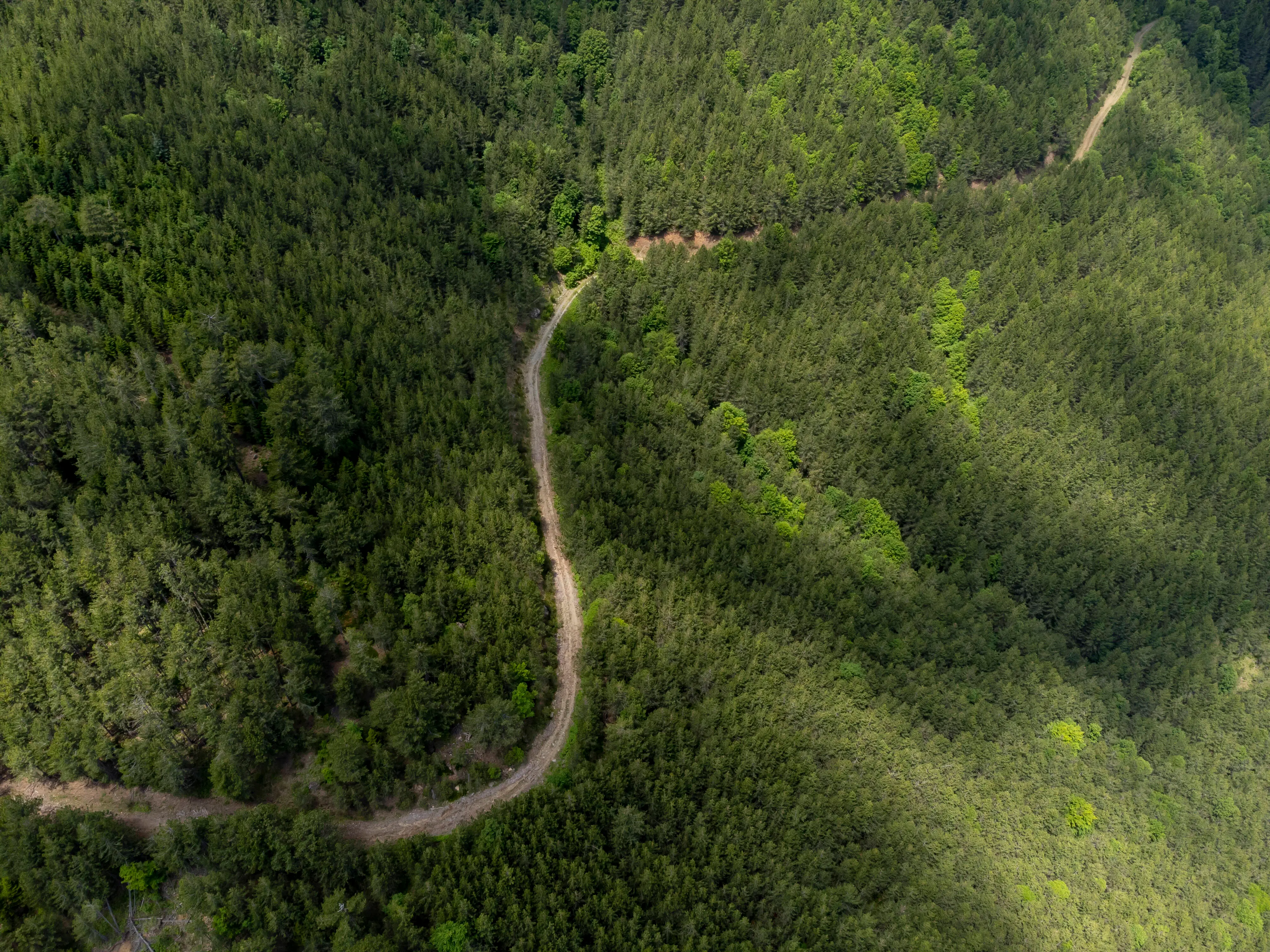 Aerial view of Dirt road in Pindus National Park, Greece (Image via Getty)
Using two decades of satellite data, scientists mapped how land ecosystems change through the year and found that spring, summer, autumn, and winter do not follow a single global schedule. The study was led by researchers from the University of California, Berkeley, and published in Nature.
The results indicate that the local areas are able to have significantly different seasonal timing of vegetation growth, precipitation, and biological activity.
Such variations can be found even within the same hemisphere or latitude and may determine the functioning of ecosystems as well as the evolution of species. The study disputes the notion of seasonal changes being of a uniform type globally.
By observing vegetation cycles from space, the team created a global map of seasonal timing. This map highlights areas where seasonal patterns are strongly misaligned. Many of these areas overlap with regions of high biodiversity.
The study suggests that local climate patterns, geography, and long-term weather cycles play a role in shaping these differences. Scientists say these findings may affect how climate change, ecology, agriculture, and conservation are studied in the future.
Mapping Earth’s seasonal timing from space
The research team analyzed 20 years of satellite imagery to track seasonal changes in Earth’s land ecosystems. The data allowed them to measure when vegetation begins to grow, peaks, and declines in different regions.
According to lead author Drew Terasaki Hart, “Seasonality may often be thought of as a simple rhythm – winter, spring, summer, fall – but our work shows that nature’s calendar is far more complex.”
The map revealed big seasonal differences even between neighboring regions. In some cases, forest growth or flowering peaks weeks or months apart.
The researchers found that Earth’s five Mediterranean climate regions showed forest growth cycles that peaked about two months later than other ecosystems. These regions include California, Chile, South Africa, southern Australia, and the Mediterranean Basin.
Hart noted that these differences matter because “the shape and timing of the typical local seasonal cycle differ dramatically across the landscape.”
The map also shows variation in crop harvest times and flowering seasons, offering a clearer picture of how ecosystems respond to local climate patterns rather than a global seasonal clock.
Ecological and climate impacts of seasonal mismatch
The study links seasonal mismatch to ecological processes. When resources become available at different times in nearby habitats, species may adapt to local schedules.
Hart explained that this “can have profound implications for ecology and evolution in these regions.” Over long periods, differences in breeding or flowering times could reduce interaction between populations.
The researchers highlight real-world examples. In Arizona, Tucson receives most rainfall during the summer monsoon, while Phoenix receives more rain in winter. These patterns affect plant growth and local ecosystems.
In Colombia, coffee farms separated by mountain ranges can have harvest seasons that differ as much as those of farms in opposite hemispheres. Hart said this helps explain “the complex geography of coffee harvest seasons in Colombia.”
The findings also raise questions for climate models. Many models assume uniform seasons across regions. The researchers argue that local variation should be included to better predict climate change effects. As Hart stated, models that ignore these differences “don’t take into account the fullness of our planet’s great diversity.”
Stay tuned for more updates.
TOPICS: Astronomy, Earth’s land ecosystems, Planet Earth, Space weather satellite, University of California
More Astronomy
on Primetimer:
- Satellites flying closer to Earth could reshape communications and climate science
- Trump shifts US space focus back to the Moon, delaying Mars ambitions
- NASA names international four-member crew for upcoming SpaceX space station mission
- Astronomers trace powerful blue cosmic flashes to stars being torn apart by black holes