
Growing concerns over satellite reentry and Ozone effects
-
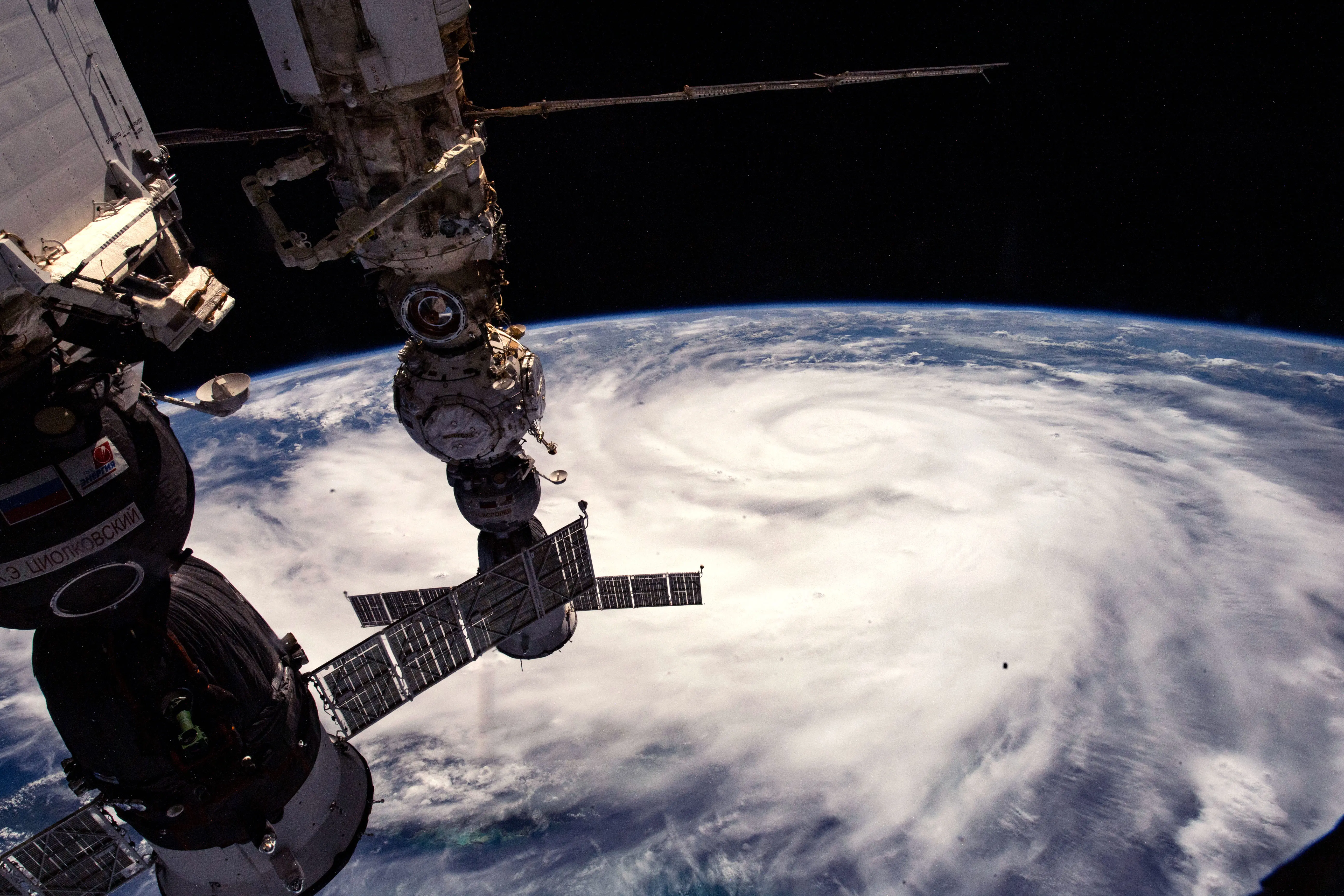 In this NASA handout image taken from the International Space Station, Hurricane Ian moves through the Caribbean Sea on September 26, 2022 just south of Cuba. The storm is expected to bring a potentially life-threatening storm surge and hurricane-force winds (Image via Getty)
The potential effects of satellite reentry on Earth's atmosphere have drawn attention in recent years, particularly regarding the ozone layer and the chemical composition of the stratosphere.
According to Universe Today, most satellites at the end of their operational life are designed to burn up upon reentry, a principle known as Design for Demise (D4D).
Research by Antoinette Ott and Christophe Bonnal from MaiaSpace suggests that reentry can produce nitrogen oxides (NOx) and alumina, which may affect the ozone layer and atmospheric conditions.
These findings raise questions about the environmental consequences of satellite deorbiting strategies and their contribution to upper-atmosphere chemical changes.
Increasing Attention on Satellite Reentry and Ozone Impact
Nitrogen Oxides and the Zeldovich Mechanism
Nitrogen oxides are produced when the high-energy shockwaves from reentering satellites force nitrogen and oxygen in the atmosphere to combine, according to Universe Today.
This process, referred to as the Zeldovich mechanism, converts an estimated 40% of a spacecraft's reentry energy into NOx.
Nitrogen oxides are recognized for their ozone-depleting potential, and unlike controlled engine emissions, NOx generated from satellite reentry is released directly into the atmosphere without the benefit of mitigation systems.
Alumina Particles from Satellite Materials
Alumina, or aluminum oxide, results from the combustion of aluminum components in satellites, according to Universe Today.
Satellites often incorporate aluminum to facilitate burning during reentry, and once released, alumina particles accumulate in the stratosphere approximately 20 kilometers above Earth.
These particles can provide surfaces for chemical reactions involving chlorine, which has implications for ozone depletion.
Models project a potential 650% increase in stratospheric alumina in the coming decades, and current data from NOAA’s SABRE mission shows that 10% of sulfuric acid particles already contain alumina.
Alternatives to Design for Demise
Satellite engineers have explored alternatives to D4D, including Design for Non-Demise (D4ND), which maintains satellite integrity during reentry.
D4ND aims to reduce atmospheric chemical release but introduces risks of debris impact on terrestrial areas, as reported by Universe Today.
International standards, such as ISO 27875, limit the probability of casualties from reentering objects to 1 in 10,000. However, the increasing number of satellites, including Starlink’s projected 40,000 units, may affect the cumulative risk.
Controlled reentry targeting remote ocean regions is another approach, although it requires additional satellite mass and fuel to ensure precise deorbiting.
Space Debris and Cleanup Considerations
According to Universe Today, the accumulation of space junk has added another challenge to managing satellite reentry.
According to NASA, the number of orbiting objects, including defunct satellites and debris, is increasing, posing a risk of collision and indirectly contributing to environmental concerns.
A group of researchers from France and Spain has applied the principles of social choice theory to rank the removal of debris using a combination of Borda scores and other aggregation techniques, identifying high-risk objects.
It is expected that the clearance of the area from debris will remove five to ten, mainly large, pieces of junk per year, thereby preventing further fragmentation. Test operations are set for 2025 and 2026.
Regulatory and Engineering Approaches
Efforts to balance satellite operation, debris mitigation and atmospheric impact include international coordination and design innovations, according to Universe Today.
The models to evaluate risk for D4D and D4ND designs are being developed in parallel with other approaches, such as Design for Containment, to mitigate ground risks and prevent the release of chemicals into the stratosphere.
These techniques demonstrate a trend of prioritizing both passive atmosphere monitoring and active control, while maintaining the satellite's operational capability and safety standards.
Stay tuned for more updates.
TOPICS: Satellite reentry effects, Design for Demise satellites, Ozone layer depletion, Space debris management, Stratospheric alumina particles