
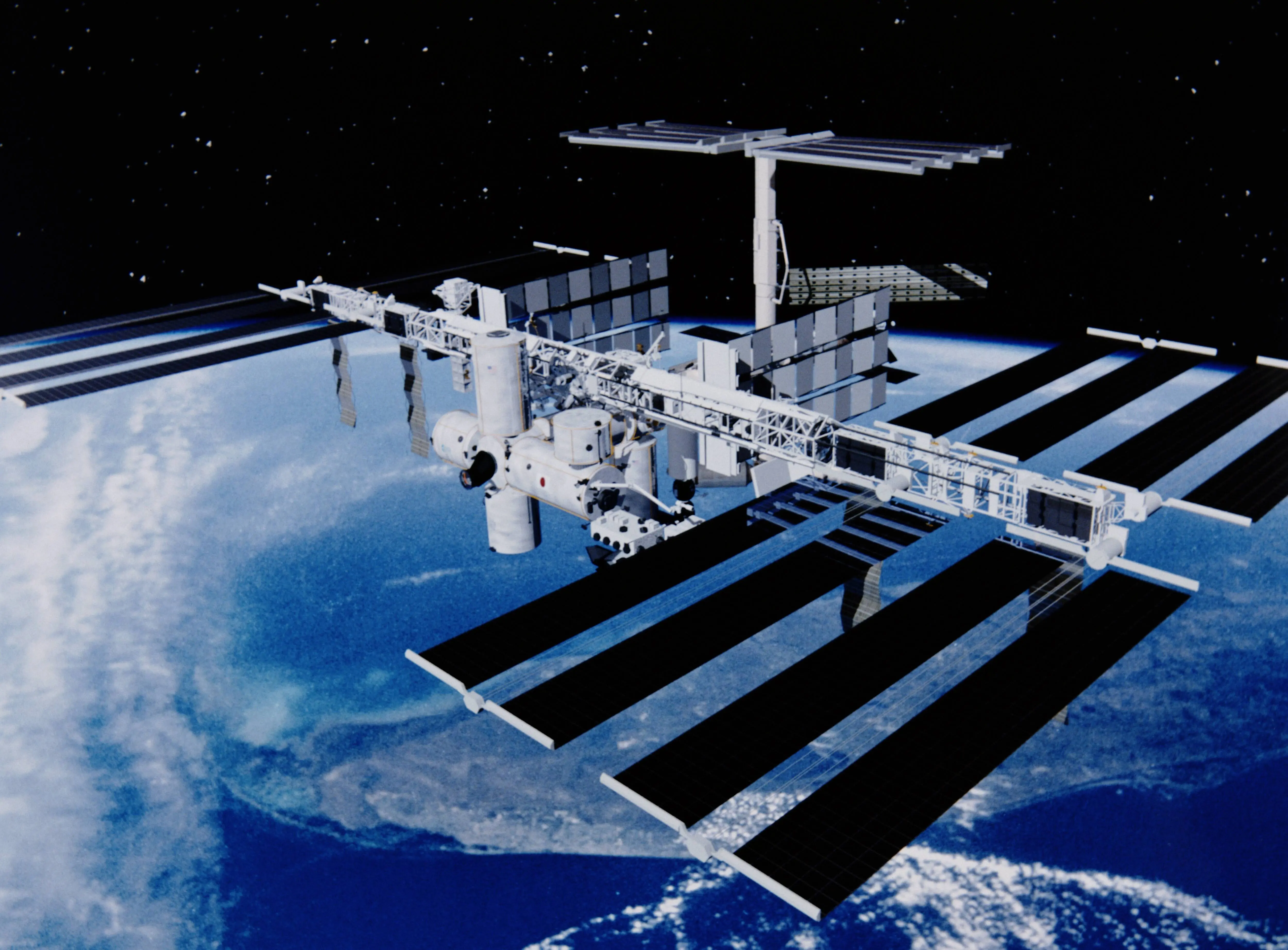
Expanding research capabilities through new modules and facilities on the International Space Station
Development of Payload Facilities
The International Space Station vehicle office is responsible for managing the station’s physical systems, which include modules, solar arrays, power distribution, cooling, life support, and crew accommodations.
The office also oversees payload facilities, which are the infrastructure required to operate experiments in space.
Payload facilities include structural mounting locations, utilities such as power and data connections, vacuum and pressurized gas capabilities, and systems for controlling thermal conditions.
These facilities ensure that scientific instruments can function in microgravity while providing the necessary safety measures for the crew.
The introduction of these payload facilities allowed the station to host experiments continuously and reliably.
Introduction of EXPRESS Racks and Glove Boxes
The first EXPRESS racks were launched to the ISS in 2002. These racks provide standardized volumes for mounting experiments and distributing power, cooling, and data connections.
They support a wide range of experiments, from life sciences to materials research, and are compatible with both US and international modules.
At the same time, the microgravity science glove box was installed to allow experiments involving hazardous substances.
The glove box provides containment and utilities such as vacuum and power while permitting crew interaction with materials in a safe environment.
Together, the EXPRESS racks and glove boxes established a flexible research infrastructure that could be adapted for multiple types of investigations.
Expansion Through International Modules and Specialized Laboratories
Additional research modules expanded the ISS’s capabilities further.
The Japanese Experiment Module, or Kibo, as it is commonly called, and the Columbus module, which belongs to the European Space Agency, offer experiment laboratories exclusive to their partner agencies.
Specialized racks, to be specific, the Combustion Integration Rack, facilitate the research of fire behavior in microgravity, consisting of liquid, gas, and solid fuels.
Fluid dynamics, material science, and combustion experiments make use of the furnaces and other specialized equipment.
The modules and facilities provide research areas with controlled environments that cannot be found on Earth, and the range of studies is from basic physics to Earth observation and agricultural monitoring.
Little by little, adding to the existing modules and research facilities has made it possible for the continuous scientific operations aboard the ISS.
Controlled experimental setups in the areas of biology, fluids, combustion, and material science are the microgravity experiments that benefit the most, whereas the Earth- and space-observation instruments take advantage of the station's orbital position.
The infrastructures that have been combined not only support NASA and international objectives but also provide access for commercial and national laboratory experiments.
Thus, these advancements have methodically increased the research potential of the station, allowing a wider range of scientific investigations and constant improvements in experimental techniques.