
Rocket Lab stock hits record high after major Space Force satellite award
-
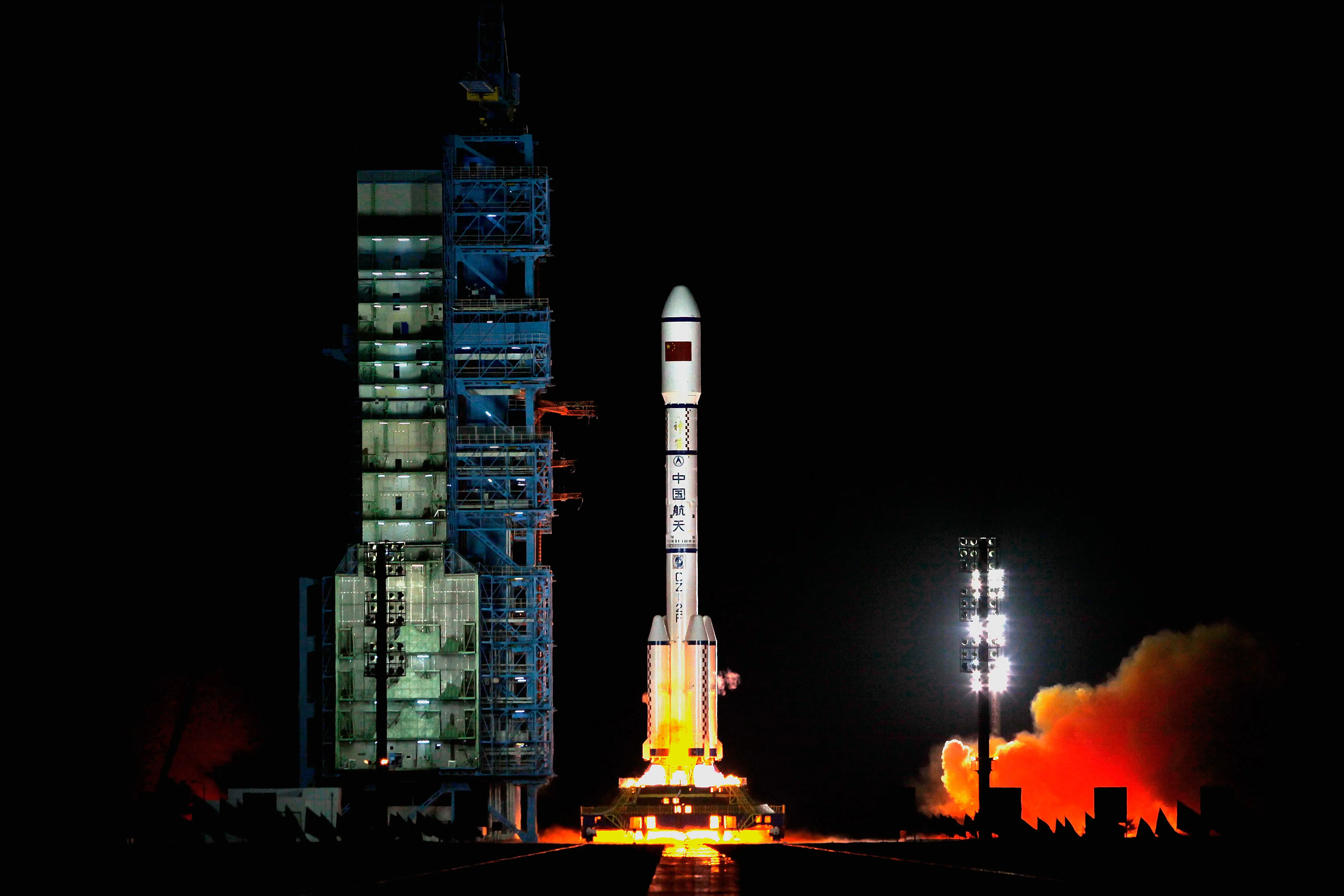 A Long March 2F rocket carrying the country's first space laboratory module Tiangong-1 lifts off from the Jiuquan Satellite Launch Center (Image via Getty)
TechStock² begins this report with Rocket Lab Corporation entering the final weeks of 2025 after a sharp stock move tied to a new U.S. defense contract.
On Dec. 19, Rocket Lab shares closed at a record level following confirmation that the company was selected by the Space Development Agency to build satellites for its missile-tracking network. The award is part of the agency’s Tracking Layer Tranche 3 program under the Proliferated Warfighter Space Architecture.
The contract places Rocket Lab among four suppliers selected to deliver infrared tracking satellites for launch later in the decade. The agreement adds to Rocket Lab’s growing role in U.S. national security space programs and increases its long-term contracted backlog.
While the satellites are not expected to launch until fiscal year 2029, the announcement drew attention to Rocket Lab’s expanding space systems business, which now includes satellite design, payloads, and components alongside launch services.
Investors are also reviewing how the award fits into Rocket Lab’s broader roadmap, including its Electron launch cadence and the planned debut of the Neutron rocket in 2026. Analysts note that recent stock gains reflect a mix of contract visibility, execution milestones, and expectations around future defense and commercial demand.
Space Force contract details and satellite scope
The Space Development Agency awarded Rocket Lab a firm fixed-price agreement valued at about $805 million to build 18 Tracking Layer satellites.
The agency said the satellites will support missile warning, tracking, and defense missions as part of a larger constellation planned for low Earth orbit. In its announcement, the agency stated the Tranche 3 program will include “72 total satellites built by four vendors.”
Rocket Lab said its share of the work includes building satellites on its Lightning platform with integrated infrared payloads.
The company noted in a release that the award represents its “largest single contract to date.” Rocket Lab also disclosed that the contract value includes options, bringing the total to about $816 million when fully exercised.
The company said the satellites will carry its Phoenix infrared sensors and StarLite protection systems. Rocket Lab added that StarLite sensors have been selected by other Tranche 3 prime contractors, which could lead to additional component sales.
According to the company, the broader opportunity across satellites and subsystems could bring total program exposure close to $1 billion over time.
The satellites are scheduled for launch in fiscal year 2029, and revenue recognition is expected to occur over several years as work progresses.
Stock reaction, analyst targets, and upcoming milestones
Rocket Lab shares closed at $70.52 on Dec. 19, according to data cited by MarketWatch, marking a large move over two trading sessions. Coverage from Reuters confirmed the structure of the Tranche 3 awards and the fixed-price nature of the contracts.
Analysts tracking the stock are now comparing current prices with previously issued targets.
Data compiled by TipRanks shows an average analyst price target in the mid-$60 range, with forecasts spanning from the low $50s to the low $80s. MarketBeat lists a lower average target, reflecting estimates issued before the recent stock move.
One analyst cited by MarketWatch said the Space Force award “adds long-term revenue visibility but does not change near-term launch timing.”
Beyond the contract, investors are watching Rocket Lab’s launch operations and development programs. In December, Rocket Lab completed the STP-S30 mission for the U.S. Space Force ahead of schedule. The company stated that 2026 will be a key year, with planned progress on the Neutron rocket and continued Electron and HASTE missions under defense contracts.
_______________________________________________
Stay tuned for more updates.TOPICS: Astronomy, Rocket Lab, Space Development Agency, Space Force Satellite, Stock analysis