
How Mount Wilson Observatory began its legacy in modern astronomy on this day in 1904
-
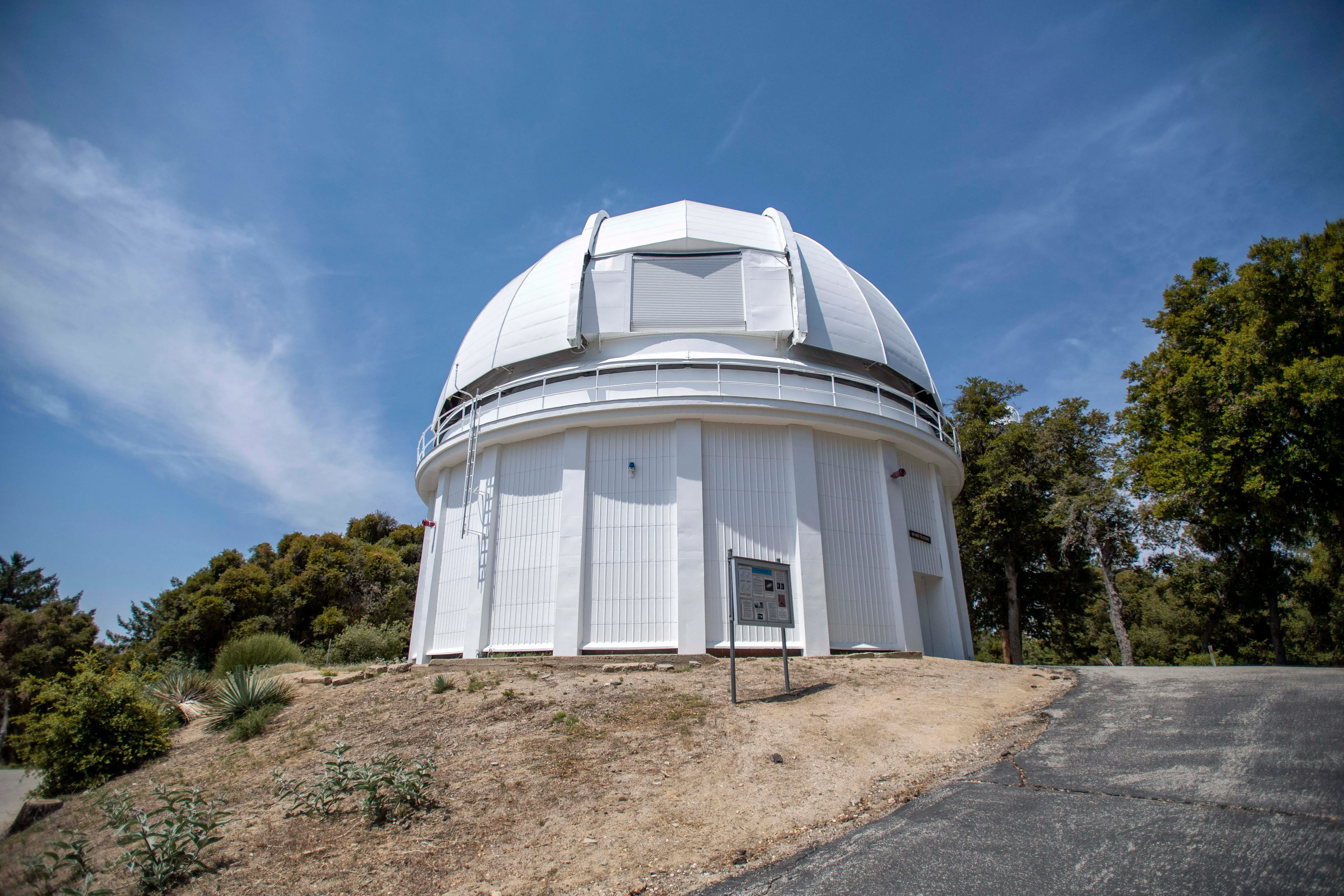 The 60-inch telescope at the Mount Wilson Observatory (Image via Getty)
On this day in space, the focus turns to the founding of Mount Wilson Observatory on Dec. 20, 1904.
The observatory was established on a peak in the San Gabriel Mountains near Pasadena, California. Its creation followed years of testing, planning, and changes in direction by astronomers seeking stable observing conditions.
Early efforts to study the site began in the late 19th century, but weather problems slowed progress. The project later moved forward under new leadership and financial backing. Throughout the 20th century, the observatory was a key player in solar and astronomical research.
Its establishment is basically a storyline that revolves around technological advancements in telescopes, an increase in institutional funding for science, and the quest for a better and unpolluted sky away from the cities.
This section reviews the observatory’s early background, the people involved, and the choices that led to its opening. Along with that, it also describes the major changes that followed the announcement of 1904 and thus paved the way for a new era of the observatory.
The different parts here give an account of the pioneering experiments on Mount Wilson and the milestones that ultimately resulted in the official commencement of operations, as documented by the records of that time and the later versions.
_____________________________________________________________Early tests and the search for clear skies
Before the observatory was founded, Mount Wilson was evaluated by astronomers looking for suitable observing locations. In 1889, two Harvard astronomers began testing conditions at the site.
Their work faced problems from rain, snow, and cloud cover, which damaged instruments and limited observations.
As a result, plans to build a telescope were dropped. However, the glass ordered for the telescope lens had already been made.
That glass was later given to George Ellery Hale, a solar astronomer known for discovering “magnetic fields in sunspots.” At the time, Hale was a professor at the University of Chicago.
He completed the telescope in Wisconsin, believing Mount Wilson was too distant from Chicago. In 1903, Hale visited Mount Wilson and reconsidered after seeing how the site compared to others.
Accounts note that he was struck by how “perfectly clear the sky was.” This visit changed the project’s direction. Hale began steps to secure land and support for a permanent observatory, shifting the focus back to Southern California.
__________________________________________________________________Funding, land agreements, and the 1904 founding
After deciding to build on Mount Wilson, Hale worked to formalize the project. In June 1904, he signed a “99-year lease” for the land on the mountain. This agreement allowed long-term use of the site for scientific work.
Funding was the next major step. On Dec. 20, 1904, Hale received confirmation that the Carnegie Institution would support the observatory. This decision marked the official founding date.
With backing secured, construction and organization could proceed. The observatory was set up to focus on solar and stellar research, building on Hale’s earlier work.
Over time, it became associated with major developments in astronomy, including improved telescope use and detailed solar studies.
Contemporary summaries describe the event simply as the moment when the observatory “was founded.” The combination of land access, financial support, and prior testing made the project viable.
From this point, Mount Wilson Observatory entered regular operation and became part of a broader shift toward large, institutionally funded observatories in the United States.
___________________________________________________________
Stay tuned for more updates.TOPICS: Astronomy, Harvard, Mount Wilson Observatory, Pasadena, California, University of Chicago