
NASA and Artemis II crew complete full dress rehearsal for first crewed lunar flight
-
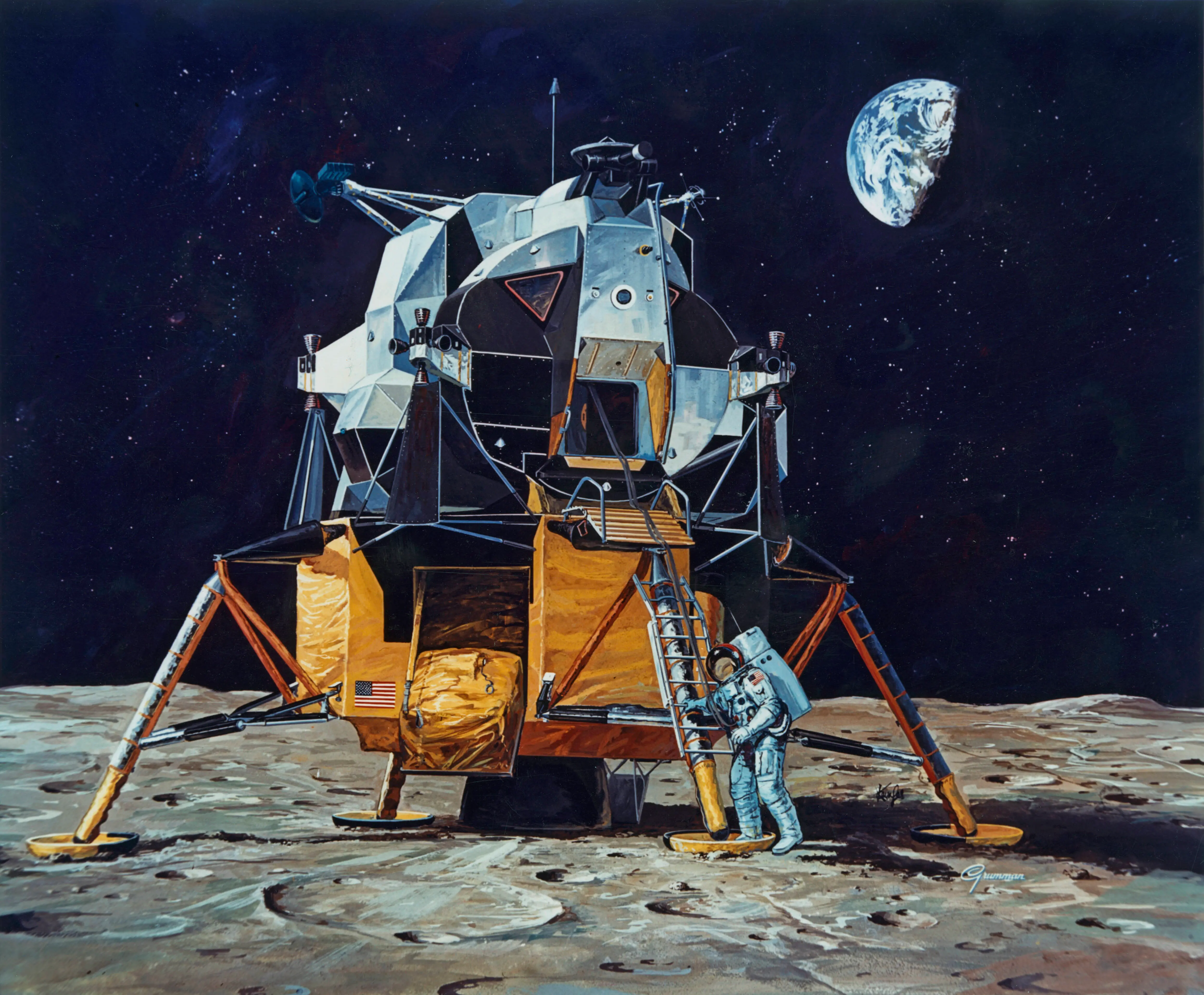 An artist's impression of Commander Neil Armstrong walking on the surface of the Moon during NASA's Apollo 11 lunar landing mission (Photo for reference, Image via Getty)
NASA Artemis Update begins with a major step toward the Artemis II mission, as NASA teams and astronauts completed a full countdown demonstration test on Dec. 20, 2025, at Kennedy Space Center.
The Artemis II Launch Team and Artemis II Flight Controllers practiced all the procedures necessary to begin the preparation for their mission, scheduled for 2021. The purpose of this testing flight was to validate the time, the processes, and the coordination between all the team members before the Artemis II mission.
During the testing flight, the astronaut crew put on their launch and entry suits, travelled to the launch vehicle, entered the Orion spacecraft, and performed the necessary checks within the spacecraft itself.
All teams were instructed to operate according to the planned schedule for their given mission, but were instructed to stop the countdown approximately 30 seconds before launch, allowing the teams to practice timelines without executing an actual launch.
NASA Administrator Jared Isaacman said, “This test marks the passage of a key milestone on America’s journey to the launchpad.”
Artemis II will be the first crewed mission of NASA’s Artemis program. The flight will send astronauts around the Moon and back to Earth.
The mission is part of NASA’s plan to continue human spaceflight beyond low Earth orbit and prepare for future missions. The countdown test is one of several major checks planned before launch.
Countdown test and crew activities
The countdown demonstration test covered the final 5.5 hours of launch-day actions. This was the first time the teams had completed the entire countdown with the crew inside the Orion spacecraft and the rocket ready for launch.
The Artemis II crew includes NASA astronauts Reed Wiseman, Victor Glover, and Christina Koch, and Canadian Space Agency astronaut Jeremy Hansen. The day began in the Astronaut Crew Quarters, where the crew donned Orion Crew Survival System suits.
After that, he also followed the same path as previous astronauts who were part of the Apollo and Space Shuttle programs. For this test, the crew traveled to the rocket in the Astronaut Transport Vehicle, which was inside the Vehicle Assembly Building.
Once inside the building, the crew took an elevator up to the crew access arm. Closeout teams helped the astronauts enter Orion, strap into their seats, and complete suit and communication checks.
After all crew members were inside, the hatch was closed. These steps matched what will happen on launch day.
During the countdown, teams dealt with issues involving audio systems and life support closeout work. These situations were handled while keeping the countdown moving. Isaacman said,
“We have many more to go, but I’m encouraged by the expertise and precision demonstrated by our teams.”
All test goals were met, and teams gathered data to review before the next phase.
Mission background and what comes next
Artemis II is scheduled to be a crewed test flight. It will be the very first mission to bring people with the aid of the Space Launch System rocket and the Orion spacecraft that will be used together. The flight won't really land on the Moon but will orbit it, thus allowing the teams to examine the spacecraft systems and crew activities in deep space.
Once the countdown test is done, the teams will proceed with their final work on the rocket and the spacecraft. After that, they will move the rocket from the Vehicle Assembly Building to Launch Complex 39B if everything is in order.
At the launch pad, the crew will be performing more countdown tests. These will concentrate on the safety steps and the actions to be taken in case of an emergency.
NASA characterizes Artemis as a timeframe comprising several stages to accomplish the goal of sending humans farther into outer space.
The agency states that it “explores the unknown in air and space.” Artemis II supports that goal by building on earlier uncrewed missions and preparing for future crewed landings on the Moon. These missions are also meant to support plans for human missions to Mars.
The countdown demonstration test showed that teams can work together under launch-day conditions. With more testing ahead, NASA will continue to review results and prepare for the Artemis II launch.
Stay tuned for more updates.
TOPICS: Astronomy, Artemis 2, Artemis II crew, NASA, NASA Artemis II mission, NASA Artemis program lunar mission
- Space weather stirs, raising hopes for a Christmas aurora display
- Avi Loeb reports new radio constraints and size estimates for interstellar object 3I/ATLAS
- Interstellar comet 3I/ATLAS shows rotating jets in a rare sun-facing tail
- What Europa Clipper and Parker Solar Probe discovered about interstellar comet 3I/ATLAS