
Features
NASA’s Perseverance Mars Rover prepares for new sample collection at Lac de Charmes
NASA’s Perseverance rover prepares for new rock sample collection at Lac de Charmes, following Margin Unit studies and continued mobility testing, as part of the Mars 2020 mission.
-
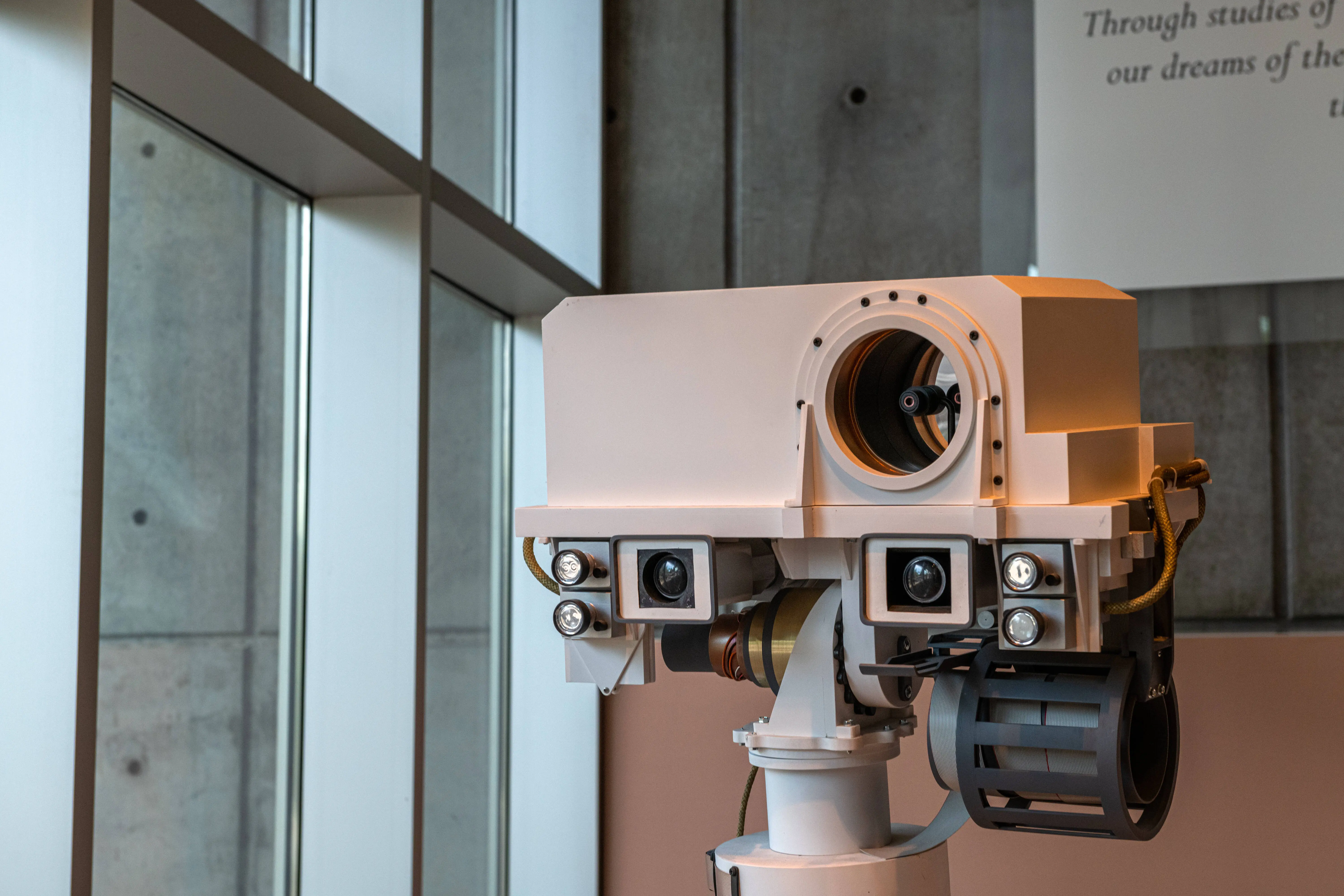 The Mars 2020 Perseverance Rover had many of it's sensors developed at ASU, and a full scale model of the rover rests in the foyer of the School of Earth and Space Exploration in Tempe, Ariz. on Monday, April 24, 2023. Arizona State University's SESE is somewhat unique in that brings together geologists, astrophysicists, chemists, climate scientists and many other disciplines to get a wholistic view of the forces that govern Earth, space, and all the myriad heavenly bodies (Image via Getty)
NASA’s Perseverance Mars rover is preparing for a new phase of rock sample collection at a region known as Lac de Charmes.
The rover is moving toward this area after completing investigations within Jezero Crater’s Margin Unit, where multiple rock cores were collected.
According to NASA and the Jet Propulsion Laboratory, Perseverance remains capable of extended surface operations and continued scientific sampling.
The mission team plans to use the rover’s certified mobility systems and autonomous navigation tools to reach Lac de Charmes and identify rocks suitable for coring during the coming year.
This preparation addresses the mission’s ongoing objective of collecting samples for potential return to Earth.
Rover status and mobility certification
Perseverance has gone around Mars for almost five years, and it has covered a distance of nearly 25 miles or about 40 kilometers, in total.
On December 17, 2025, NASA's Jet Propulsion Laboratory announced that thorough on-Earth tests of rover equipment continue to be the primary source of confirmation for the mission's long-term performance.
The rotary actuators for the steering and the movable part of the wheel were tested, proving that they can be used for at least 37 miles (60 kilometers) more. The brake testing is also in progress.
According to NASA and JPL mission briefings, engineers have thoroughly checked the rover's subsystems over the last two years and determined that they can continue to operate until at least 2031.
Autonomous navigation and daily operations
Perseverance relies heavily on autonomous driving to support long-distance travel and efficient science planning.
NASA reports that more than 90 percent of the rover’s total drive distance has used Enhanced Autonomous Navigation, known as ENav.
This system allows the rover to scan terrain up to 50 feet ahead, assess hazards, and determine a safe route without continuous input from Earth.
The navigation software evaluates terrain elevation at each wheel and accounts for pre-defined keep-in and keep-out zones.
Research findings on ENav were published in IEEE Transactions on Field Robotics, documenting its role in enabling longer daily drives across varied Martian terrain.
Scientific findings from the Margin Unit
Before going to Lac de Charmes, Perseverance carried out in-depth research in the Margin Unit that is situated along the inner side of Jezero Crater.
A peer-reviewed paper published in the journal Science described the findings of three rock samples collected from this area.
The rover covered a vertical distance of approximately 1,312 feet (400 meters) while studying rocks with olivine from September 2023 to November 2024.
The scientists announced that these rocks hold records of the interactions between Mars’ interior and its water and atmosphere.
According to NASA, olivine is a mineral formed at very high temperatures that is later altered when exposed to water, which is why scientists can use it to trace environmental changes over time.
Relevance of Olivine and Carbonates
NASA selected Jezero Crater as Perseverance’s landing site partly due to the presence of olivine and carbonate minerals.
According to the Science publication and NASA mission descriptions, magma intrusions likely formed olivine-rich rocks that were later exposed through erosion.
Interaction with water from an ancient lake and carbon dioxide in Mars’ early atmosphere produced carbonate minerals. These materials can preserve chemical records of past environmental conditions.
Samples from the Margin Unit showed varying degrees of water alteration, with lower sections exhibiting more evidence of water exposure than higher elevations.
Objectives at Lac de Charmes
As Perseverance departs the Margin Unit, NASA states that Lac de Charmes offers new opportunities to collect additional olivine-rich rock cores.
Comparing samples from this region with those already collected will support the mission’s objective of documenting Mars’ geological history and past habitability.
Perseverance continues to collect and cache rock and regolith samples as part of the Mars 2020 mission, which aims to enable future missions to retrieve these materials for laboratory study on Earth, according to NASA’s official mission overview.
Stay tuned for more updates.
TOPICS: NASA Perseverance Mars rover, Jezero Crater Perseverance, Mars sample collection mission, NASA, NASA Jet Propulsion Laboratory Mars, NASA Mars 2020 mission, Perseverance rover Lac de Charmes, Perseverance rover science updates