
Why does Pennywise from IT: Welcome to Derry only come every 27 years?
-
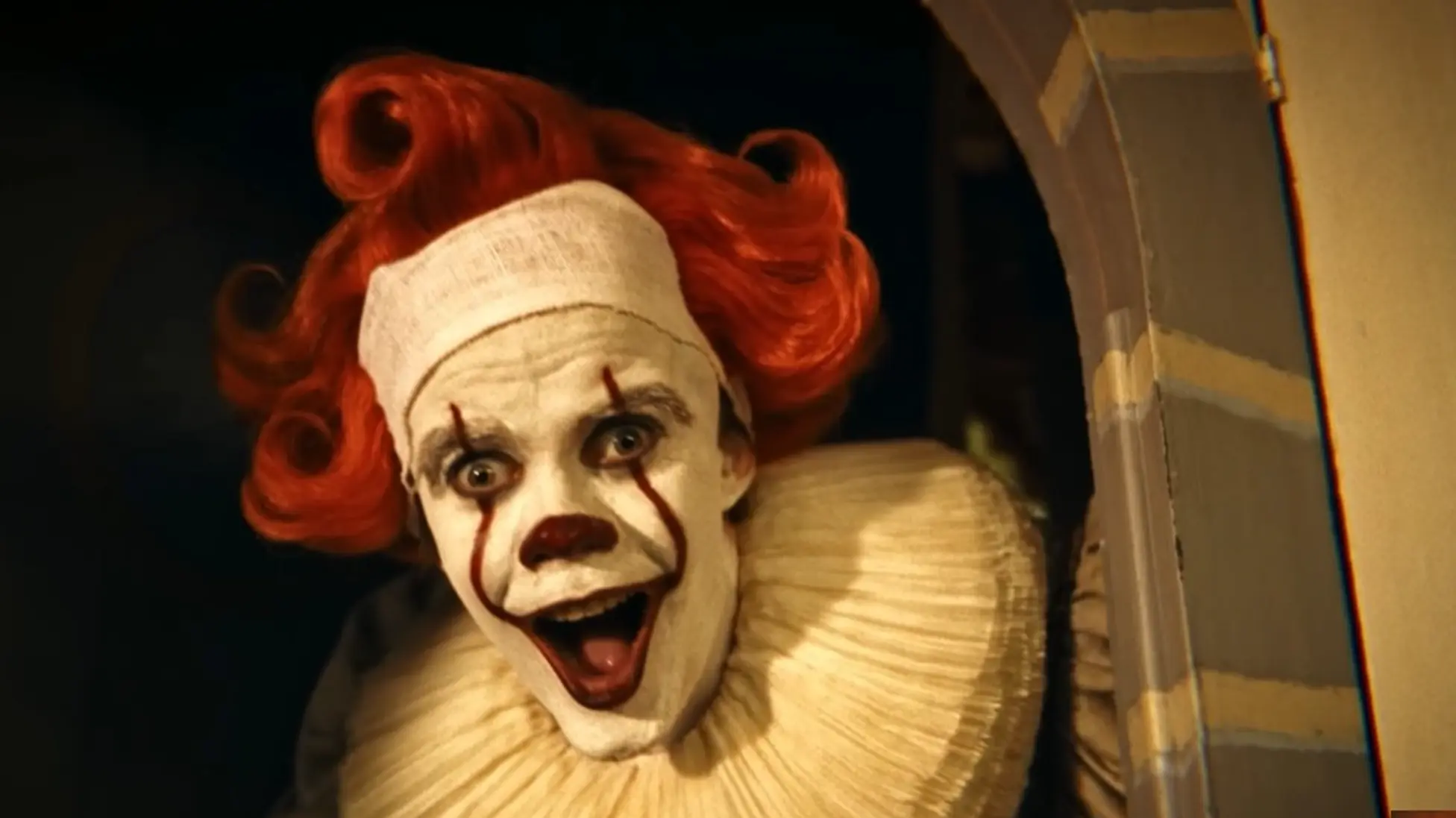 Pennywise in IT: Welcome to Derry Image via HBO.
Pennywise only comes back “every 27 years” in IT: Welcome to Derry because the franchise treats the clown as the hunting face of an older creature that runs on a long sleep and wake cycle. The HBO prequel series, developed by Andy Muschietti, Barbara Muschietti, and Jason Fuchs, sets season 1 in 1962 and follows new Derry residents as fear and violence rise again.
Bill Skarsgård reprises Pennywise, while the supporting cast includes Jovan Adepo, Taylour Paige, Chris Chalk, James Remar, Stephen Rider, and Madeleine Stowe. The season premiered in late October 2025, rolled out weekly, and ended with Winter Fire in mid December 2025. It is also positioned as the cycle that helps explain why the clown’s return feels “scheduled,” even when the story insists it is not.
What Stephen King’s It says about the 27-year cycle, and why Pennywise keeps returning
In Stephen King’s It, the “every 27 years” idea is not framed as a magical calendar rule that the creature dutifully follows. Instead, Mike Hanlon reconstructs a pattern by studying Derry’s history, then compares those repeating spikes in tragedy to predict when the horror has returned. Those interludes are the story’s big clue that the town has been through multiple “awakenings,” even when most residents treat each wave as an isolated catastrophe.
That is why the number is usually presented as “roughly” 27 years in discussion of the canon. The point is the rhythm, not perfect arithmetic. A long dormancy passes, then a concentrated stretch of disappearances and violence follows, then the silence returns. The pattern is scary because it is consistent enough to spot, but slippery enough that most people do not connect the dots in time.
The in-story logic also reads like predation, not haunting. The creature in It targets fear and uses terror as part of the hunt. Then it withdraws, which fits a “feed, then recover” cycle more than a supernatural appointment book. Mike’s research makes the cycle legible, but the town’s behavior keeps it survivable for the monster. Adults minimise what children report, institutions look away, and the community’s tendency to forget or downplay past horrors helps the next return land without a coordinated defense.
The lore also explains why the clown persona keeps returning. Pennywise is a preferred disguise, but the entity is defined by shape shifting and by selecting forms that match a victim’s fears. A clown remains a dependable lure for children, and a near generational gap ensures there is always a fresh group of kids who have not learned Derry’s worst lessons yet.
That hunting logic is also how the show frames its scares. As per TheWrap report dated October 26, 2025, series co-creator Jason Fuchs said,
“That translates, I think, into a different tone for the Pennywise scares. It’s more visceral.”
The quote is about IT: Welcome to Derry as a production, but it lines up with the core rule in IT that the monster returns when it is ready to hunt again.
How IT: Welcome to Derry, and the movies turn the cycle into timeline eras
On screen, the franchise makes the rhythm feel even cleaner because it needs a clear timeline. The 2017 film It focuses on the kids era, while It Chapter Two returns to the same story decades later when the characters are adults. IT: Welcome to Derry uses the same gap logic in reverse, anchoring itself in 1962 so it can explore an earlier awakening and show what the book mostly describes in historical fragments.
The creative plan for the series leans into that structure as a repeatable engine for future seasons. As per a Variety interview dated October 26, 2025, co-creator Andy Muschietti said,
“Our big story arc involves three seasons, mainly based on the three critical cycles of Pennywise, which are 1962, 1935 and 1908.”
That approach turns the cycle into a set of eras that viewers can follow. It also gives the show room to tell a complete story in each period, while keeping the larger question consistent: what does Derry look like when the town is sliding into the kind of denial that lets the monster work, and what happens when someone notices the pattern early enough to fight back.
So why 27, and what is the number doing for the story?
In the universe, the clearest explanation is metabolism plus strategy. Pennywise is framed as a predator that withdraws for long stretches, then returns when conditions are right for another feeding run. A long gap also gives the town time to reset, meaning old witnesses age out, memories blur, and the next generation grows up without a shared warning label for what Derry becomes during an awakening.
Outside the story, 27 years is practical horror math. It is long enough for childhood trauma to turn into adult denial, which is exactly the emotional fuel the franchise keeps returning to. For IT: Welcome to Derry, the same interval is also a clean structure for serial storytelling, since it lets each season explore a new era without abandoning the central rule that keeps the timeline coherent.
Stay tuned for more updates.
TOPICS: Pennywise, HBO Max, IT: Welcome to Derry Season 1, Bob Gray