
Richard Linklater and Zoey Deutch teamed up for Nouvelle Vague, a film about the French New Wave
-
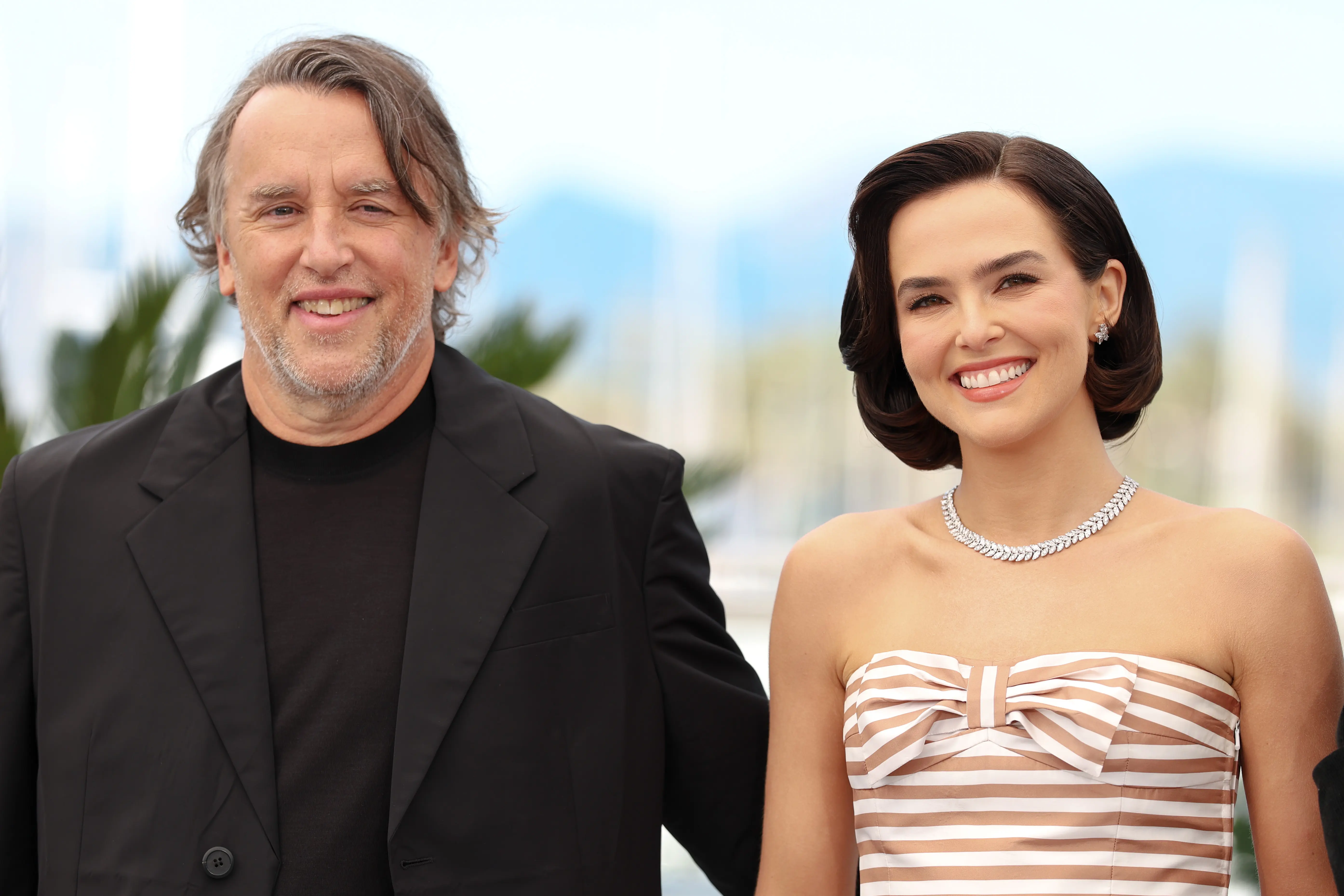 CANNES, FRANCE - MAY 18: Richard Linklater and Zoey Deutch pose during the "Nouvelle Vague" (New Wave) photocall at the 78th annual Cannes Film Festival at Palais des Festivals on May 18, 2025 in Cannes, France. (Photo by Monica Schipper/Getty Images)
Richard Linklater has teamed up with Zoey Deutch for Nouvelle Vague, a French-language film that rewinds to 1959 and follows Jean-Luc Godard as he figures out how to make Breathless with Jean Seberg and Jean-Paul Belmondo. Shot in black-and-white and framed in 4:3, the movie leans into the period’s look and working methods, then builds its story around the practical problem Godard faced: how to turn a new kind of idea into a finished feature.
The project also arrived with a “film-about-a-film” pitch that fits the moment it portrays, when the French New Wave was starting to become visible in public, not just in essays or arguments. Richard Linklater’s approach is to dramatize that shift through a single production, using real documentation from the original shoot as a guide.
What Nouvelle Vague is about, and why Richard Linklater centres it on Godard making Breathless
At the story level, Nouvelle Vague dramatizes the months around Godard’s first feature, starting with the Cannes atmosphere of 1959 and moving toward the summer shoot that becomes Breathless. The film tracks the decision-making, the pressure, and the improvisational problem-solving that shaped what ended up on screen, with Zoey Deutch playing Seberg and Aubry Dullin playing Belmondo, opposite Guillaume Marbeck as Godard.
The hook is simple and specific: it is not a broad history lesson, and it is a close look at a production where the rules were being rewritten in real time. That focus lets the movie show how a movement can be felt through logistics. Who is cast, how scenes get staged, how dialogue lands in a new rhythm, and how a director’s choices become visible once the camera starts rolling.
The title also does literal work. “Nouvelle vague” translates to “new wave,” and the movie treats that wave as a practical shift in habits, not only a label applied later by critics. It frames a generation around Godard, including the wider filmmaking world in which the film is placed, rather than presenting him as a solo myth.
The production choices underline that idea. The film is in French, shot in black-and-white, and composed in a 4:3 frame, a package that signals what era it is trying to recreate and how closely it is trying to sit inside it. That visual plan also supports the “making-of” angle, because it keeps attention on faces, blocking, and camera placement instead of the modern visual sweep.
Richard Linklater has described the build as unusually evidence-driven for a movie he did not originally live through. As per a Reuters report dated May 18, 2025, Richard Linklater said,
“We had the camera notes, we had the reports. I never knew more about a film that I didn’t make.”
That line captures the core method here: reconstruct the known facts, then dramatize the human moments inside them. Festival positioning matters because it reinforces the “movie about a movie” framing. Nouvelle Vague played in Competition at Cannes, which put it in the same public arena where its story begins, and later materials positioned it for a broader rollout, including streaming in the U.S.
Who Richard Linklater and Zoey Deutch are, and why this pairing fits the material?
Richard Linklater is known for character-led filmmaking and for building stories around time, process, and conversation. Cannes’ own write-up places this film in the context of his wider work, pointing to the “Before” films and to formal experiments like Waking Life and Boyhood as part of the creative background he brings into this French setting.
Zoey Deutch comes into the film as a performer playing someone who carried a specific kind of on-camera presence in that era. The Seberg role also asks for an “outsider in Paris” angle that fits the Breathless mythos, because Seberg was an American star working inside a French filmmaking scene that was trying to separate itself from older models.
The collaboration is not random, either. Deutch previously worked with Linklater in Everybody Wants Some!!, and that shared history matters for a film built around rhythm and rehearsal-like energy. A “making-of” story needs actors who can sell the work, not just the finished performance, and this casting leans into that requirement.
Deutch’s approach to public conversation around the role also signals how personal and specific the preparation was. As per a San Francisco Chronicle report dated October 27, 2025, Zoey Deutch said,
“People might have been creeped out...I did visit, though, with Rick when I was in costume. I think people at the cemetery might have been creeped out.”
In context, it reflects how intensely she researched Seberg while still trying to respect the real person behind the image.
What the French New Wave was, and the production details that show how Nouvelle Vague recreates it
The French New Wave was not one “look,” but it did share a recognizable break from tradition: younger directors pushed personal authorship, location work, and a more immediate style that rejected studio polish. The movement is tied to late 1950s and 1960s French cinema, and to figures such as Godard and François Truffaut, with stylistic signatures that included freer form and new editing and camera habits.
Nouvelle Vague mirrors that spirit through its format and its behind-the-scenes emphasis. Cannes’ description highlights the film’s use of black-and-white, handheld camera energy, and editing choices meant to echo the period, while still functioning as a modern dramatization rather than a pure documentary recreation.
On the institutional side, France’s film ecosystem is part of the story the movie tells by implication. Official CNC materials about Cannes-backed projects include Nouvelle Vague among films supported through France’s cinema support structure, which is one reason international projects like this can be mounted at scale in-country.
Stay tuned for more updates.
TOPICS: Nouvelle Vague (New Wave), Richard Linklater, Zoey Deutch, Cahiers du cinéma, Cannes Film Festival