
Culinary Class Wars Season 2 Episode 2 shows that emotions can elevate a dish, but only if the technique holds
-
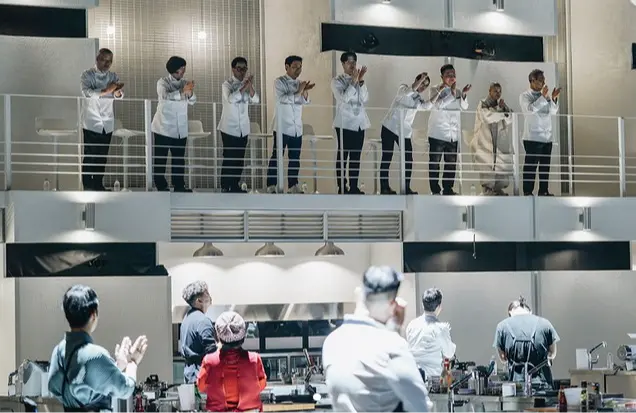 Culinary Class Wars 2 (Image via Instagram/@netflixkr)
In Culinary Class Wars Season 2 Episode 2, emotion is present everywhere: in the stories chefs carry with them, in the reasons they chose certain dishes, and in the way the room reacts to survival or elimination.
Yet the episode draws a firm boundary between feeling and forgiveness. Episode 2 shows that while emotion can elevate a dish, it only matters if the technique holds. When technique fails, sentiment offers no protection.
The episode unfolds almost entirely within the Black Spoon Elimination Round, a setting designed to reduce cooking to its most exposed form.
Each chef is judged on a single plate, with no opportunity for recovery. Against this backdrop, personal narratives emerge naturally.
Some chefs cook dishes tied to identity, memory, or family. Others arrive carrying visible pressure, fear, or hope.
Culinary Class Wars Season 2 Episode 2 does not suppress these emotions—but it refuses to let them outweigh execution.
Culinary Class Wars Season 2 Episode 2 draws a line between heart and precision
The clearest illustration comes through French Papa. His bouillabaisse is presented not merely as a classical French seafood stew, but as a dish grounded in personal history.
He explains that he stepped away from cooking to care for his son, who has a developmental disability, and that returning to the kitchen represents both renewal and responsibility.
“I wanted to show him that I could still be a great chef,” he says. The weight of the moment is unmistakable.
Yet when the dish reaches the judges, the evaluation remains technical. Temperature, aroma, and balance are assessed without concession.
Paik Jong-won notes the importance of serving the stew hot to manage fishiness for Korean palates, a detail French Papa had already anticipated.
The survival decision arrives only after the judges taste and confirm that the fundamentals are intact. Emotion frames the moment, but technique secures the outcome.
A similar pattern appears with Brewmaster Yun. Her dish combines distilled soju, boiled pork, and tavern-style accompaniments, reflecting her identity as a brewer rather than a formally trained chef.
She visibly struggles with nerves, momentarily losing track of her preparation. Still, the judges focus on how the elements work together.
Anh Sung-jae remarks that when food pairs with alcohol, “it’s the cook themselves—their touch—that elevates.”
Her survival is granted because the dish functions as intended, not because of novelty or vulnerability.
By contrast, Episode 2 also demonstrates how emotion collapses when technique falters. Several chefs present dishes rooted in comfort or personal pride, only to be eliminated swiftly.
Korean dishes described as heartfelt or familiar are dismissed for imbalance, chewiness, or lack of distinction.
One contestant is told the dish is “too ordinary.” Another hears that bitterness lingers in the broth. These critiques are delivered without cruelty, but without hesitation.
Kim Do-yun’s elimination reinforces this principle from a different angle. As a Hidden White Spoon, his return carries the weight of unfinished business.
His perilla oil noodles earn praise from Paik Jong-won, who notes their fragrance and balance. Yet Anh Sung-jae identifies flaws in texture and aftertaste. He says,
“For my taste buds… I don’t think I would call this delicious.”
Despite the visible effort, the personal investment, and the stakes of redemption, the dish does not meet both judges’ standards. Emotion does not bridge the gap.
What emerges across Culinary Class Wars Season 2 Episode 2 is a consistent hierarchy: intention supports technique, but never replaces it.
Judges repeatedly acknowledge what chefs are trying to do. They describe understanding the goal, the philosophy, or the memory behind a dish.
But understanding does not equal approval. Survival is granted only when execution sustains the idea.
This distinction becomes especially clear when emotion and technique align. Dweji-Gomtang in NY presents a dish tied to his identity and international success, but it is the clarity of the broth and restraint of seasoning that secure survival.
Paik Jong-won remarks that the soup is savory without being greasy and praises its clean finish. The emotional resonance of a globally beloved dish is amplified by technical control.
Episode 2 also shows that emotional restraint can be as powerful as emotional openness. Seoul Mother’s Seoul-style set meal avoids dramatics altogether.
Her food is described as simple, refined, and rooted in tradition. After tasting, Paik Jong-won says,
“It’s changed my dialect. I feel like I’m from Seoul now.”
The reaction signals how deeply technique can carry feeling when nothing is forced.
By the end of the episode, Culinary Class Wars Season 2 Episode 2 clarifies its governing rule.
Emotion is welcome, even powerful—but it must ride on precision. Stories can deepen a dish, but only if the fundamentals are sound.
In this kitchen, feeling is not judged. Food is. And only when the two align does survival follow.
Stay tuned for more updates.
TOPICS: Culinary Class Wars season 2 , Culinary Class Wars season 2 Episode 2
- Who is Jun Lee from Culinary Class Wars season 2? Everything to know about the chef explored
- Who is Hu Deok-juk from Culinary Class Wars season 2? Everything to know about the chef explored
- Culinary Class Wars Season 2 Episode 2 turns Korean comfort food into the most dangerous gamble
- Culinary Class Wars: The Hidden White Spoon twists turns Season 2 into a high-risk redemption test for returning champions