
Does Marty Supreme have a post-credits scene? Details analyzed
-
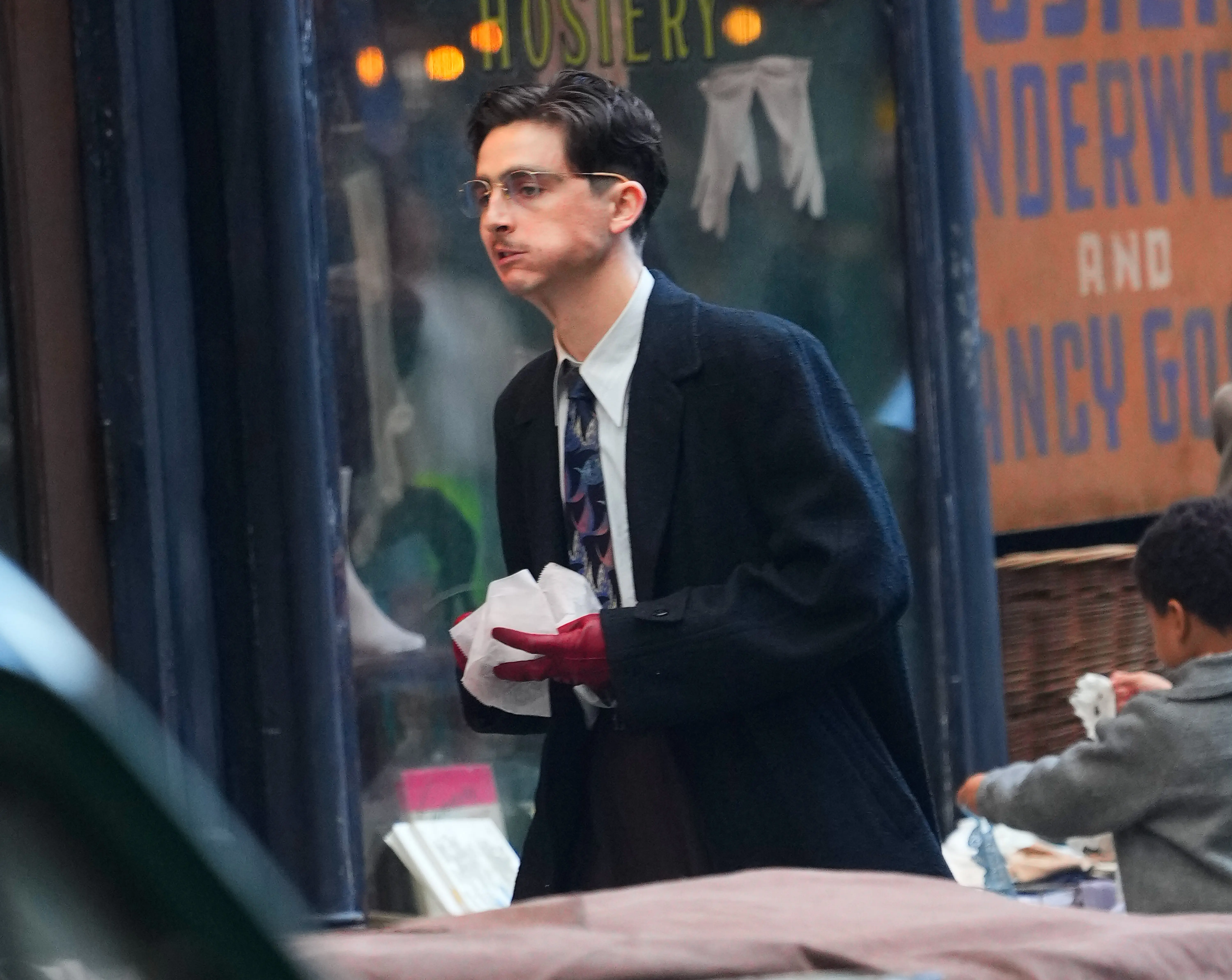 NEW YORK, NY - OCTOBER 01: Timothee Chalamet is seen on the set of "Marty Supreme" on the Lower East Side on October 1, 2024 in New York City. (Photo by XNY/Star Max/GC Images)
Marty Supreme does not have a post-credits scene, so there is no extra stinger, secret dialogue, or sequel tease waiting after the credits roll. Josh Safdie’s 1950s New York sprint is built to end on its own last-image punch, with Timothée Chalamet playing Marty Mauser, a shoe-store kid who treats table tennis like a religion and ambition like oxygen.
The film also features Gwyneth Paltrow as Kay Stone, with a supporting lineup that includes Fran Drescher and Odessa A’zion, plus a few attention-grabbing cameos that were part of the rollout conversation.
Released by A24, Marty Supreme leans into Safdie’s pressure-cooker style, but shifts it into a period hustle story where fame, ego, and survival blur together. If cinegoers are heading in mainly to “wait for the post-credit,” the clean answer is no.
Does Marty Supreme have a post-credits scene? What happens after the credits
No. Marty Supreme has no post-credits scene, and there is no mid-credits tag either. Listing sites that track these add-on moments have marked the film as having nothing extra during or after the credits, which matches what audiences are seeing in theaters.
That choice fits the way Safdie designs momentum in Marty Supreme. The movie does not feel like it wants to “promise” a next chapter. It wants to complete the emotional argument of this chapter. By the time the credits hit, the story has already delivered its final turn, and the last sequence plays like the button.
The more practical takeaway is that the final minutes before the credits are the thing to lock in. Marty Supreme treats table tennis less like a sport and more like an identity test. Marty is chasing mastery, but he is also chasing permission to exist loudly in a world that keeps narrowing his options. The ending leans into that idea instead of shifting into franchise language.
Viewers can see that same mindset in how Chalamet has described the movie’s intensity and the way he approached it. As per the GQ report dated December 24, 2025, Timothée Chalamet said,
“In my head something’s telling me ‘Don’t go too hard,’”
while explaining why he kept pushing anyway. That quote lands as a good lens for the ending, too, because the film’s closing stretch is basically Marty ignoring every internal warning sign and betting on himself, again.
Safdie has also framed Chalamet as someone who understands culture and pressure, which matters when a movie chooses not to cushion its ending with a wink. As per the GQ report dated December 24, 2025, Josh Safdie said,
“He just has a way of thinking about culture that’s really sophisticated.”
In context, that sophistication shows up in the final beat. The film knows modern audiences have been trained to wait for a bonus scene. It still refuses to add one, because the point is not what Marty does “next.” The point is what it costs him to become “Marty Supreme” in the first place.
Marty’s hunger does not turn off. The relationships around him do not magically stabilize. His “win” does not fully solve the person he is. That is also why there is no clean sequel breadcrumb. The film is already saying that the cycle continues, whether the camera follows it or not.
What Marty Supreme is about, and why the ending is the real epilogue?
Marty Supreme follows Marty Mauser in early 1950s New York, where he is stuck selling shoes and quietly boiling over. Table tennis becomes his escape hatch and his obsession. He is not just trying to get good. He is trying to become undeniable.
The story expands as Marty’s ambitions pull him into bigger rooms, sharper rivals, and messier trade-offs. Kay Stone is a key presence in that world, and the film uses her to reflect how power works when it is dressed like glamour. Marty reads attention as opportunity, and he also reads it as proof that his dream is real.
The ending then doubles down on the film’s core question. If Marty gets what he wants, what does he become? The final sequence answers with action more than explanation. It plays like an epilogue because it shows the shape of Marty’s future without spelling it out.
Marty Supreme cast, production details, and the real-life parallels behind Marty’s hustle
Marty Supreme is anchored by Timothée Chalamet as Marty Mauser and Gwyneth Paltrow as Kay Stone, with Fran Drescher playing Marty’s mother and Odessa A’zion as his girlfriend. The movie is written and directed by Josh Safdie, and it keeps his fast, crowded energy, just filtered through a 1950s setting.
Chalamet’s preparation became part of the film’s public story, especially the table tennis training. As per an ABC News report dated December 16, 2025, Timothée Chalamet said,
“They got me to a level where I could make it look good and precise,”
While discussing working with a coach for years. That detail matters for viewers wondering why the game sequences feel so physical. The film wants Marty’s skill to look earned, not faked. The press tour framing also leaned hard into ambition, which lines up with the movie’s “dream big” wiring. As per the ABC News report, Timothée Chalamet said,
“it is OK to dream big,”
While talking about what he hopes the movie sparks in people. That quote connects to the film’s real-life inspiration, too. Marty Mauser is loosely based on table tennis figure Marty Reisman, who was known for turning the sport into a hustler’s arena and a personal mythology.
That “hustle athlete” idea is the key parallel. The movie is less interested in sports purity and more interested in the kind of person who turns a niche skill into a full identity. That is why the post-credits question ultimately feels beside the point. Marty Supreme already leaves viewers with its thesis. Marty does not need an extra scene to keep going. The film tells viewers he never stops.
Stay tuned for more updates.
TOPICS: Marty Supreme, A24, Gwyneth Paltrow, Timothee Chalamet, Marty Supreme post credit scene
- Timothée Chalamet EsDeeKid rumour explained as fans debate secret rapper theory
- "Thank you for your kindness": Susan Boyle appreciates Timothée Chalamet highly for his kind words
- “They're definitely planning a collab”: Fans react as Timothée Chalamet has a cryptic answer to viral fan theory he is the English rapper EsDeeKid
- "All will be revealed in due time": Timothée Chalamet responds to whether he really is British rapper EsDeeKid