
King of Collectibles' Ken Goldin points to a generational shift fueling the collectibles market
-
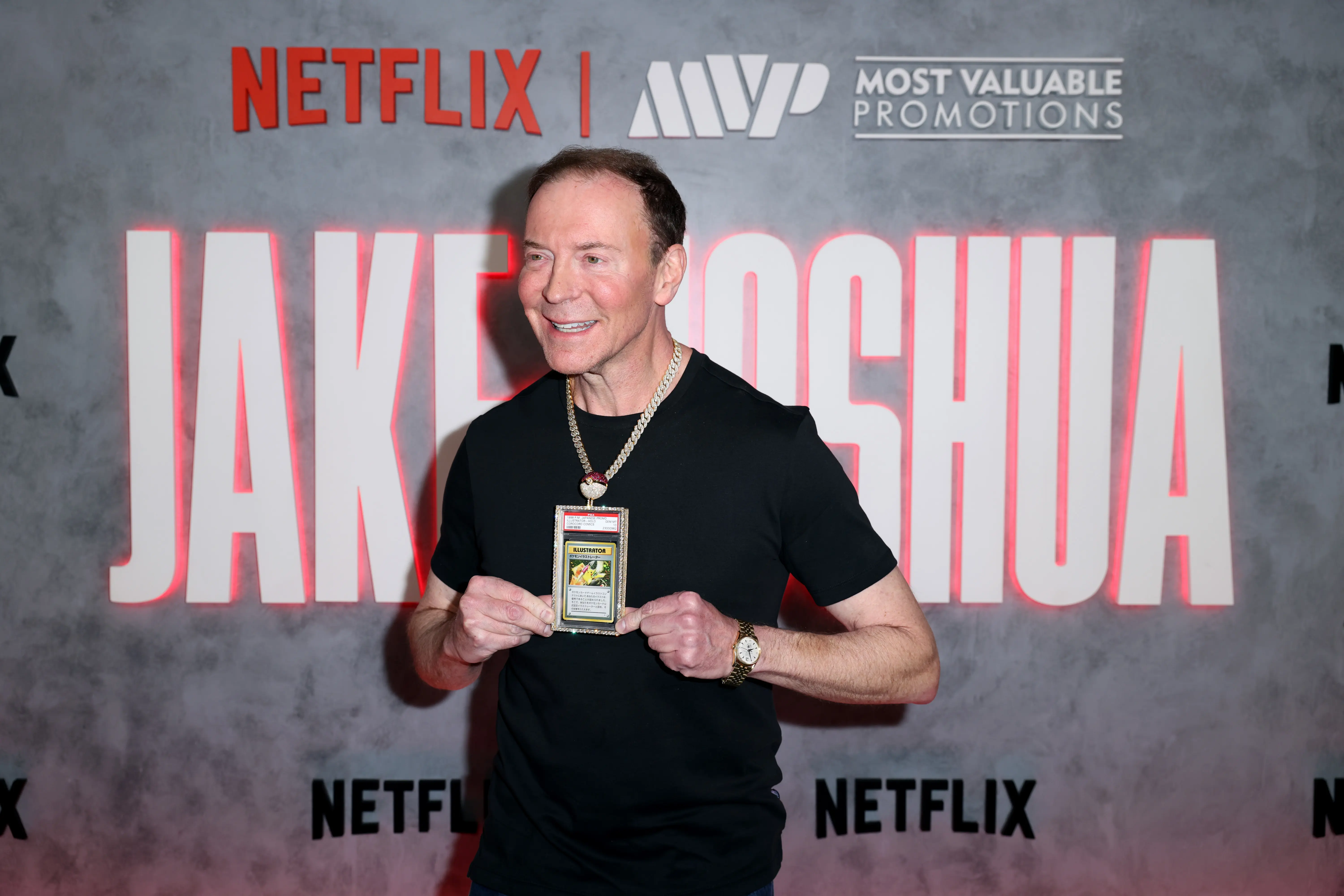 Ken Goldin (Image via Getty)
Ken Goldin, founder and CEO of Goldin Auctions and the central figure of Netflix’s King of Collectibles, has identified a generational shift as a key force reshaping the global collectibles market.
Speaking on CNBC’s Squawk Box on December 22, 2025, Goldin framed collectibles not as a passing trend but as a maturing category increasingly recognized by investors, asset managers, and financial institutions.
During the interview, Goldin described collectibles as an “accepted alternative asset,” a phrase that captured both the scale and the direction of the market.
Trading cards, sports memorabilia, and pop culture artifacts, once considered niche or speculative, are now being evaluated alongside more established asset classes.
Goldin connected this shift to demographic change, arguing that collectors entering their peak earning years are investing in objects tied to their own cultural memory rather than traditional fine art.
Goldin’s comments arrived as King of Collectibles continues to expand its reach on Netflix, bringing the mechanics of high-end auctions and record-breaking sales into the mainstream.
The visibility of the show has coincided with heightened public interest in how collectibles are valued and why demand has remained strong even after the pandemic-era boom cooled.
King of Collectibles and the changing definition of value
On King of Collectibles, Goldin is frequently seen brokering deals that blur the line between passion and portfolio. That theme carried into his CNBC appearance, where he pointed to concrete data supporting the market’s growth.
Wealth managers, he noted, have been tracking the sector for years. Morgan Stanley has estimated the global collectibles market at approximately $100 billion, with a projected compound annual growth rate of more than 6% from 2024 through 2027.
Those figures place collectibles well beyond hobby status and into the realm of structured investment consideration. Goldin anchored the discussion in headline-making sales. He said,
“The numbers people are getting (for collectibles), whether it’s a trading card that sells for $12.3 million, whether it’s Ruby Red Slippers that sell for $32 million, whether it’s a Shohei Otani baseball that sells for $4.2 million, have just been going up astronomically.”
He then highlighted one category in particular:
“And then you’ve got Pokémon, which is like literally up 3000% in the last 20 years.”
That reference to Pokémon Trading Card Game singles reflected a broader pattern visible on King of Collectibles, where nostalgia-driven assets consistently attract competitive bidding.
Goldin linked that demand directly to age and experience. Collectors now in their 40s and 50s, he explained, did not grow up aspiring to own Dutch Masters or contemporary art by figures such as Andy Warhol.
Their formative years were shaped instead by sports heroes, entertainment franchises, and pop culture touchstones that are now being rediscovered through high-end collectibles.
This generational preference, Goldin suggested, has altered what constitutes cultural significance in the auction world. Items tied to athletes, film, television, and gaming are no longer treated as secondary to fine art.
Instead, they function as artifacts of lived history for buyers who want to secure pieces of the era that shaped them. On King of Collectibles, that motivation often surfaces in client conversations, where emotional connection and financial rationale intersect.
Goldin also contrasted the current market environment with the volatility of the early pandemic years. He said,
“The difference between 2025, as we approach 2026, and the COVID era in 2020–2021 is that I think, back then, (there) was indiscriminate buying.”
He recalled how items lacking rarity or long-term significance experienced rapid price inflation:
“Stuff that was not that rare to me, that should not be very valuable, was going up 200%, 300% and 400%, weekly.”
According to Goldin, that phase has passed. The market depicted on King of Collectibles now reflects a narrower focus. He said,
“Now, what’s happening is that there are a lot more people seriously involved. There are less people that are looking to get in to make a quick buck, and the best-of-the-best (collectibles) are constantly going up.”
The emphasis has shifted from volume to quality, from speculation to selectivity. That distinction matters as financial institutions evaluate whether and how to integrate collectibles into broader investment products.
Recognition as an alternative asset class does not guarantee stability, but it does invite formal scrutiny, standardized valuation models, and risk assessment frameworks.
Goldin’s position places him at the intersection of that evolution, both as an auction executive and as the public face of King of Collectibles.
The show itself has played a role in normalizing conversations about collectibles as assets. By documenting negotiations, authentication processes, and market dynamics, King of Collectibles has demystified a world that once operated largely behind closed doors.
Goldin’s CNBC remarks echoed that transparency, reinforcing the idea that understanding context—cultural, generational, and economic—is essential to understanding value.
As the collectibles market moves toward 2026, Goldin’s assessment suggests a recalibration rather than a retreat. Demand persists, but it is increasingly shaped by informed buyers seeking significance over speculation.
The generational shift he described is not merely about age but about memory, identity, and the objects people choose to preserve as markers of their time.
In that sense, King of Collectibles functions as both a chronicle and a case study. It captures a moment when collectibles have crossed from subculture to asset class, driven by collectors who see their past reflected in cardboard, leather, and ink rather than canvas and marble.
Goldin’s perspective frames that transition as durable, rooted in who today’s collectors are and what they value.
Stay tuned for more updates.
TOPICS: King of Collectibles: The Goldin Touch , Ken Goldin
- King of Collectibles: The Goldin Touch: An oddly shaped Cheeto sells big as Chef Nick DiGiovanni shares his wish list
- “It’s by far the best”: Ken Goldin on raising the bar in Netflix’s King of Collectibles: The Goldin Touch season 3
- Who is Ken Goldin? Everything to know about the man behind King of Collectibles: The Goldin Touch season 3