
Features
Former ISS Program Manager Michael Suffredini looks back on the creation of the International Space Station
Former ISS Program Manager Michael Suffredini reviews the creation of the International Space Station, detailing assembly, operations, and commercial integration from 2005 to 2015. Insights from Houston We Have a Podcast.
-
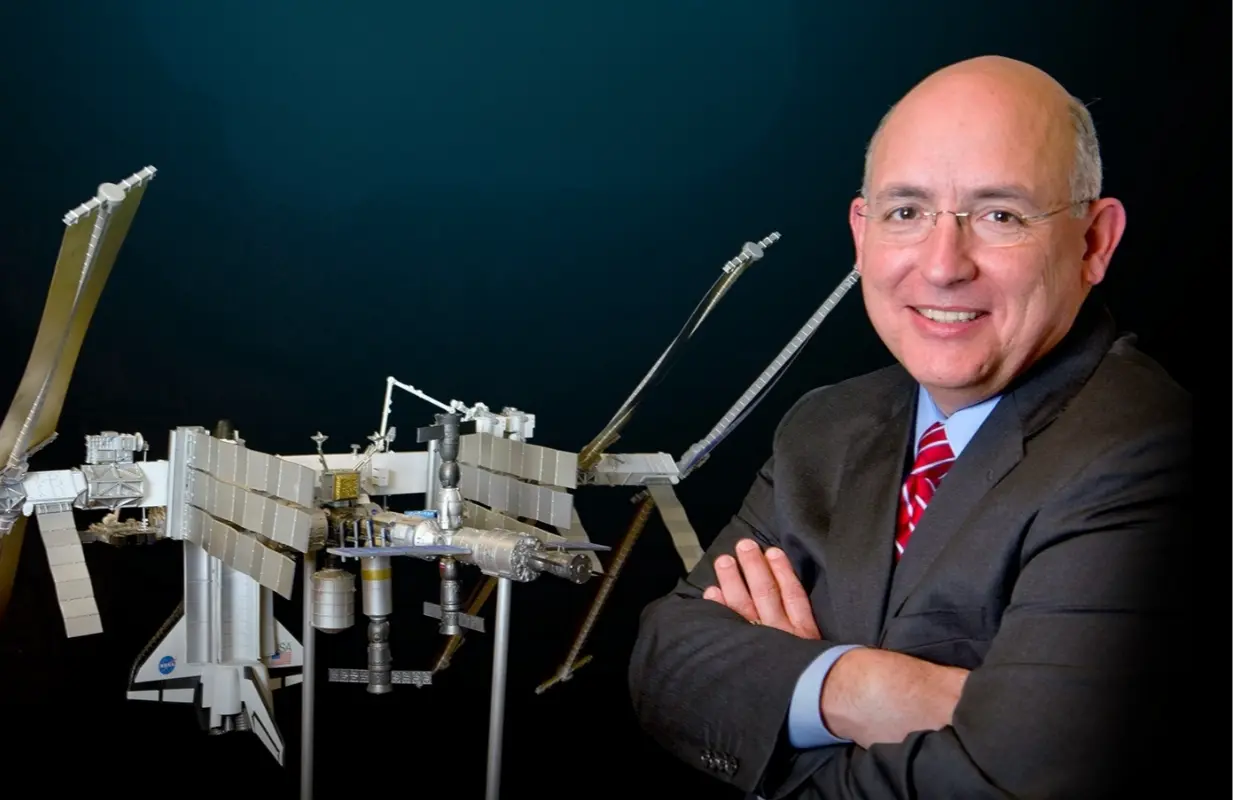 ISS program manager and Axiom Space co-founder Michael Suffredini (Image via NASA)
The International Space Station (ISS) was developed through decades of planning, engineering, and international collaboration, resulting in continuous human presence in orbit since November 2, 2000.
Former ISS program manager Michael Suffredini explained that the creation of the ISS involved managing complex assembly processes and integrating research objectives with operational requirements.
Suffredini, who served as program manager from 2005 to 2015, oversaw the completion of station assembly and the transition to full utilization, highlighting the technical, operational, and international challenges involved.
His insights were shared during Houston We Have a Podcast Episode 405, recorded on September 25, 2025.
Early career and entry into the ISS program
Michael Suffredini began his aerospace career after graduating from the University of Texas with a degree in aerospace engineering.
Initially focused on high-performance aircraft, he shifted toward spaceflight after taking a course in orbital dynamics taught by Victor Szebehely.
Suffredini joined NASA operations and later became a civil servant in 1989, working on Space Shuttle mission evaluation.
He mentioned that he was with the shuttle program for a few years and later he became a manager and his job title was Space Shuttle "Program Manager."
Suffredini attributed the ease of his move to the ISS program to George Abbey saying that Abbey made the decision that it was time for him to go to the "space station."
Within the ISS program, Suffredini first led the ISS Research Office, which he described as overseeing the integration of payloads and operational planning. He noted,
"I created this, what we called the ISS research office…we were affecting the design of the lab, and the lab’s design was way far along."
He later moved to the vehicle office, overseeing hardware launches including Z1 and the P6 truss segment.
Leadership during assembly and operations
During the assembly phase, Suffredini focused on operational coordination and problem resolution. He recalled specific challenges, including solar array deployment and the Solar Alpha Rotary Joint (SARJ) issues, saying,
"We discovered that while the shuttle was there doing the EVA, but then shortly thereafter, we tried to deploy our solar array again on P6 solar array, and it broke."
He explained the decision-making process regarding priorities during shuttle missions, stating that the "priorities" were focused on fixing the solar array.
Suffredini emphasized the collaborative approach with international partners, noting that the teams worked through numerous issues together as a "partnership," which contributed to station reliability and international coordination.
Transition to utilization and commercialization
After the completion of assembly, the ISS program shifted toward utilization and commercial integration.
Suffredini explained that crew time was allocated specifically for research and commercial activities, saying,
"We changed the thought process and said, no, we’re going to obligate this much time for research."
This approach also supported early commercial spaceflight initiatives through the COTS program, enabling companies such as SpaceX and Orbital to provide cargo and crew services.
Suffredini described the significance of commercial engagement in orbit, explaining that this was a major step that probably cemented the idea of the "commercial" use of the space station and enabled the concept of a commercial space station to exist.
He added that NASA’s approach to leveraging private companies allowed for broader utilization of low Earth orbit infrastructure.
Through his decade of leadership, Michael Suffredini guided the ISS program from assembly to operations and commercial integration, maintaining a focus on technical, operational, and international coordination.
His reflections in Houston We Have a Podcast Episode 405 provide detailed insight into the processes and management decisions that enabled the ISS to remain operational for 25 years.
Stay tuned for more updates.
TOPICS: NASA International Space Station, ISS commercial use, ISS research and utilization, NASA human spaceflight, NASA space programs, Space Shuttle program, SpaceX ISS cargo
More NASA International Space Station
on Primetimer: