
Saudi Arabia prepares for heightened solar storms with new space-weather satellite
-
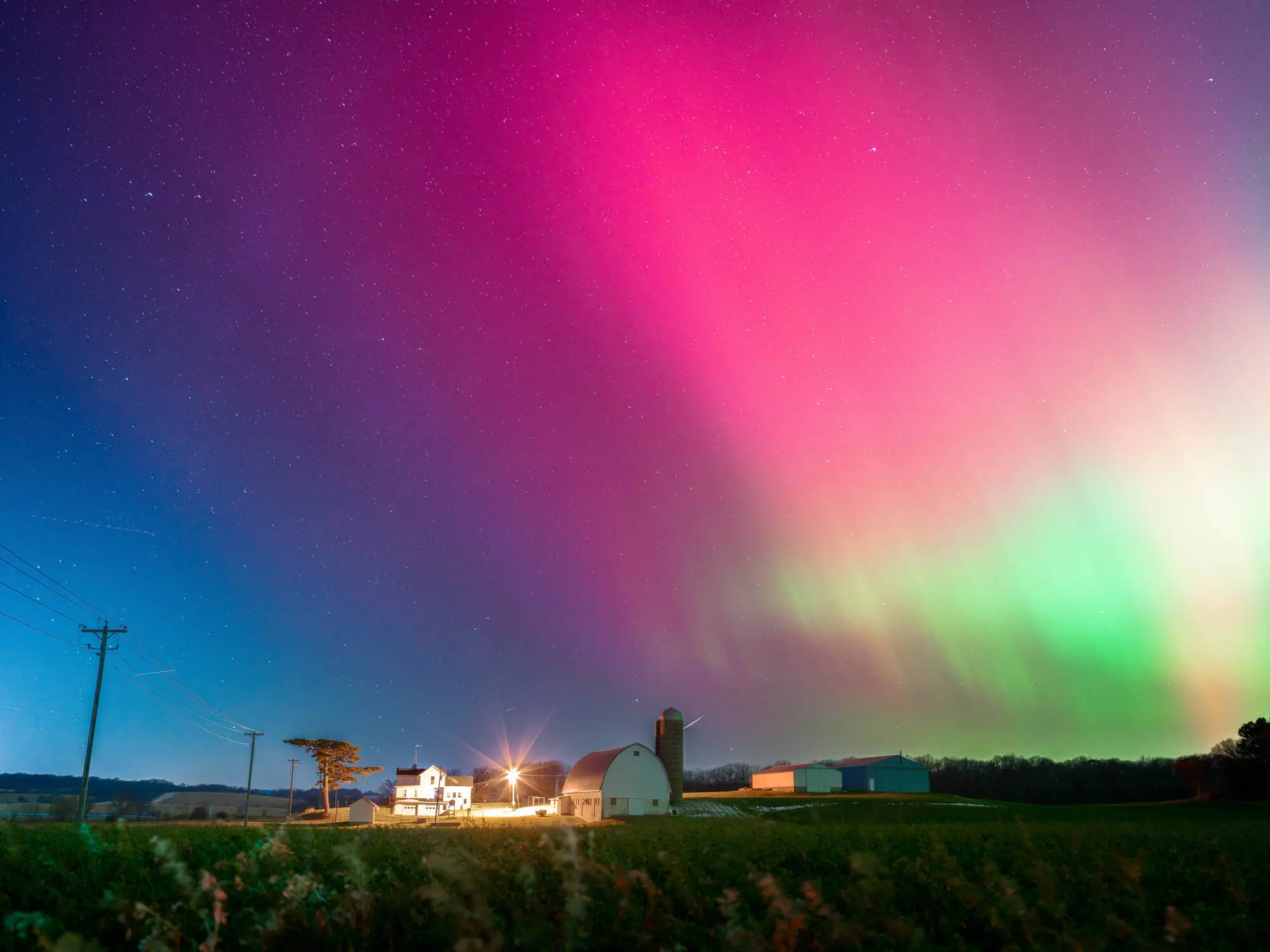 The Aurora Borealis lights up the night sky over Monroe, Wisconsin, on November 11, 2025, during one of the strongest solar storms in decades (Image via Getty)
SatellitePro ME reports that the Saudi Space Agency is increasing its work to track space weather as the solar cycle reaches its peak in 2025.
The agency said this is important for many sectors in the country, including communication networks, satellite services, and navigation systems.
It explained that having quick and accurate information helps organisations understand changes in space weather and prepare for any effects on their operations.
The agency noted that solar activity may become stronger this year, which can affect systems that depend on signals from space.
It also said that working with other countries and partners is important, as shared data helps improve awareness of space-weather conditions.
A key part of this effort is the plan to launch Saudi Arabia’s first satellite for space-weather monitoring.
This mission is being developed with NASA and the National Industrial Development and Logistics Programme (NIDLP) under Vision 2030.
The satellite will study the Sun and report on changes that may affect technology on Earth.
The agency said the data will help government bodies, aviation, researchers and satellite operators maintain stable services and make informed decisions.
These steps support national readiness as solar activity increases in 2025.
Strengthening national monitoring efforts
The agency said the rise in solar activity this year makes regular monitoring important. Space weather can affect flight paths, satellite tools, and communication links.
The agency explained that steady updates allow organisations to check current conditions and decide if any actions are needed.
It said this helps them plan ahead and understand how space weather may influence everyday operations.
The agency is also sharing more data with local researchers and technical teams so they can study solar activity in detail.
It noted that working with other international partners helps confirm findings and gives a wider view of changes in space weather.
These collaborations support better tracking of solar patterns and help ensure information is available when conditions change.
This work is linked to national plans for stronger readiness in sectors that depend on stable signals.
The agency said that understanding space weather helps protect services that rely on satellites and clear communication.
With the solar cycle reaching its peak, there is a focus on gathering data, studying patterns, and staying updated.
The agency added that it will continue working with local and global partners to maintain accurate information and support organisations throughout the year.
Preparing for the new space-weather satellite
The agency also highlighted its plan to launch the country’s first space-weather satellite, first announced in May 2025.
The mission is being developed with NASA and NIDLP. The agency said the satellite will study solar activity and send data to help users understand conditions that may affect important systems on Earth.
Once in orbit, the satellite will observe solar radiation and other signs linked to changes in the Sun. The agency explained that this information will support communication networks, aviation, navigation, and other services that depend on steady signals.
It said the satellite is part of a wider plan to build national skills in space science and improve the country’s ability to collect and use space-weather data.
The agency noted that the satellite supports Vision 2030 goals by adding new scientific tools and helping different sectors plan for possible disruptions caused by solar activity.
The mission will also help build a long-term record of conditions in space, which can guide research and operational decisions.
The agency said it will continue working with NASA and NIDLP during the launch and early operation stages.
It plans to make the collected data available to national institutions to help support monitoring and research.
_____________________________________________
Stay tuned for more updates.TOPICS: Astronomy, Saudi Arabia, Saudi Arabia Space Agency, Solar storms, Space weather satellite
- Schott and AZUR Space develop advanced cover glass for high-performance space missions
- Muon Space wins $1.9M contract to develop infrared missile-tracking payload
- ‘Galactic Brain’ initiative seeks to move high-demand AI processing off Earth and into space
- Supermassive black hole unleashes ultra-fast winds moving at 20% the speed of light